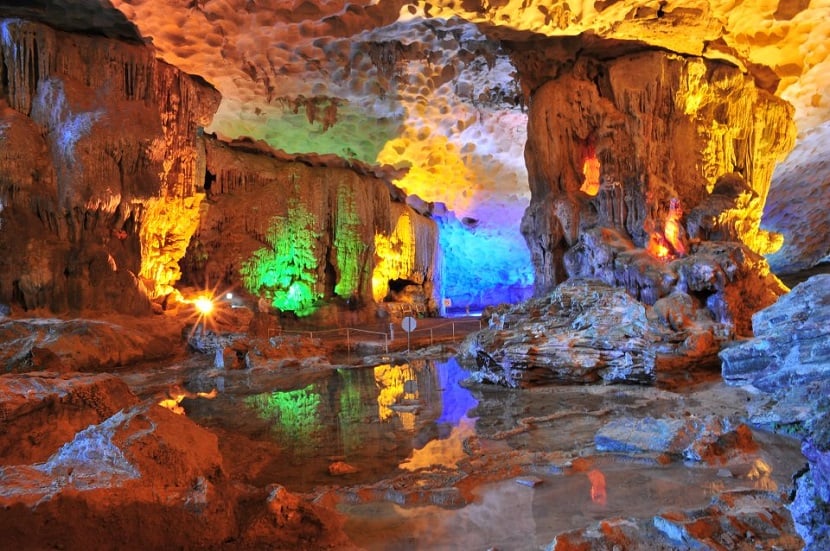
Exploring a Cave in Halong Bay Vietnam is a highlight of any cruise itinerary, offering travelers a glimpse into breathtaking subterranean worlds. This guide highlights the six most iconic caves that you must visit at least once to fully experience the natural grandeur and geological history of this stunning maritime landscape.
Overview about Cave in Halong Bay Vietnam
Ha Long Bay, a UNESCO World Heritage site, is a geological masterpiece home to thousands of limestone islands and hidden grottoes. Exploring a Cave in Halong Bay Vietnam is an essential part of any itinerary, offering a glimpse into millions of years of karst evolution and local folklore during Halong weather
Iconic Caves You Must See
-
Sung Sot Cave (Surprise Cave): As the most famous cave in Halong Bay, it covers over 10,000 square meters. Its two massive chambers are filled with stalactites that resemble “chandeliers,” living up to its name with every turn.
-
Thien Cung Cave (Heavenly Palace): Renowned for its intricate and colorful rock formations, this cave in Halong Bay is steeped in legends of a Dragon King’s wedding.
-
Dau Go Cave (Wooden Stakes Cave): A famous cave in Halong Bay known for its historical significance; it was once used to hide the sharpened stakes that defeated Mongol invaders in the 13th century.
For an adventurous experience, Luon Cave and the Dark & Bright Cave are best explored by kayak, allowing you to paddle through low-hanging arches into tranquil, hidden lagoons. Whether you seek history or natural wonder, these underground palaces are the crown jewels of the bay.
Top 11 Mysteries Cave in Halong Bay Vietnam
Sung Sot Cave (Surprise Cave) – Halong Bay’s largest cave
The Origin of the Name
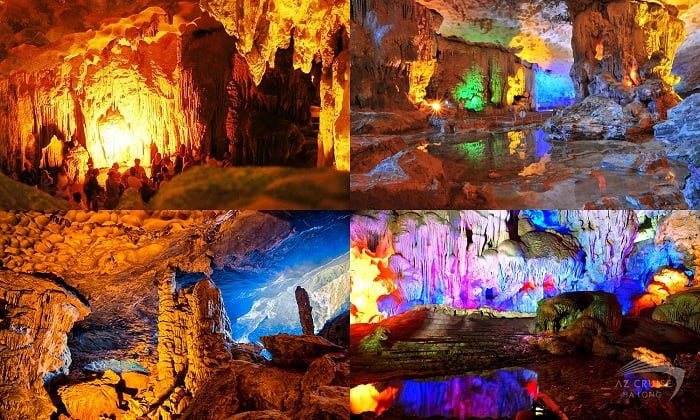
As the largest and most frequented Cave in Halong Bay Vietnam, Sung Sot Cave was first discovered by French explorers in 1901. It was later dubbed “Grotte Des Surprises” (The Cave of Surprises) in 1938. The name is fitting; visitors are consistently shocked to find such a massive, majestic interior hidden behind a deceptively modest entrance.
Highlights of the Cave
To reach this famous cave in Halong Bay, travelers hike up shaded granite stairs, offering a mountain-climbing sensation with views of the bay below. The interior spans a staggering 10,000 square meters, featuring 30-meter-high ceilings.
The cave in Halong Bay is divided into two distinct chambers:
-
The Outer Chamber: Resembles a grand theater adorned with hundreds of hanging stalactites.
-
The Inner Chamber: Accessible via a narrow passage, this vast hall can hold thousands of people. It features a “royal garden” with a natural skylight, a pond, and lush vegetation.
Legends and Lore This specific Cave in Halong Bay Vietnam is tied to the legend of Thanh Giong, a folk hero who left behind his stone horse and sword to protect the locals from demons. Legend says the scattered rocks and small pools inside the cave are the lasting footprints of his horse from that epic battle.
Dau Go Cave (Wooden Head Cave) – A Halong Bay cave with a diverse ecosystem
Formed roughly two million years ago during the Pleistocene era, Dau Go Cave is often regarded as the most exquisite cave in Halong Bay. Spanning approximately 5,000 square meters, its grand entrance sits 27 meters above sea level. As a famous cave in Halong Bay, it draws visitors who seek a sense of ancient, untouched tranquility.
When you explore this Cave in Halong Bay Vietnam, you are stepping into a “Wooden Stakes” legend, where historic battles and natural beauty collide in a peaceful, limestone sanctuary.
The Origin of the Name
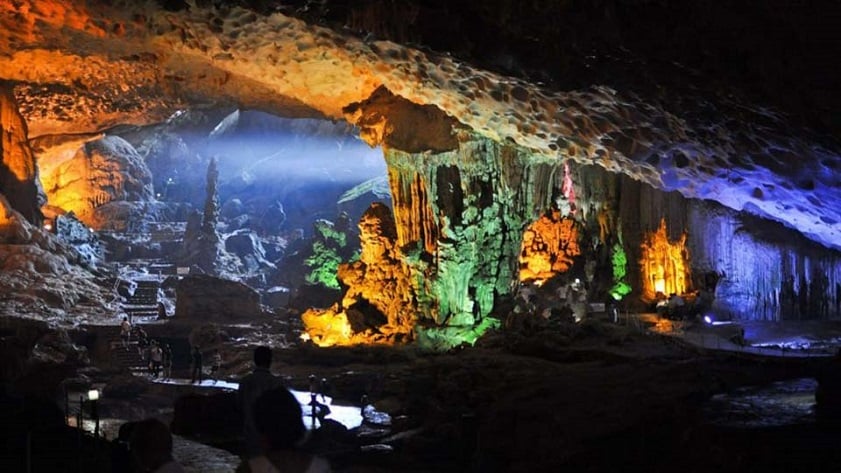
There are three fascinating theories behind the naming of this famous cave in Halong Bay. The most popular historical legend suggests it was originally called Giau Go (Hidden Wood), as General Tran Hung Dao used the cave in Halong Bay to hide giant wooden stakes before a 13th-century naval battle. Others believe the name comes from wood blocks left behind by fishermen repairing boats, or simply because the island looks like a massive log from a distance.
Highlights of the Cave
The entrance to this Cave in Halong Bay Vietnam glows with an emerald hue, resembling a giant jellyfish. Inside, the 25-meter-high dome acts as a “mystery waterfall” of limestone, featuring three distinct chambers:
-
First Chamber: Filled with stalactites resembling lions, pythons, and cocks.
-
Second Chamber: Displays a stunning “rocky islands in the waves” formation.
-
Third Chamber: Home to massive stone columns and a hidden freshwater lake.
Unlike any other cave in Halong Bay, Dau Go boasts a unique ecosystem. Due to its wide entrance and high humidity, you can find moss, ferns, and even woody plants thriving deep within its limestone walls.
Trong Cave (Male Cave)
The Origin of the Name
The story behind this famous cave in Halong Bay is one of Vietnam’s most touching legends. It tells of a fisherman and his lover who were separated by a storm. The woman sought refuge in the nearby Trinh Nu (Virgin) Cave, while the man was trapped in Trong Cave (Male Cave). Though they could hear each other’s voices across the water, they could never reach one another. Tragically, the fisherman transformed into a tall stalactite column, forever gazing toward his love. Local legends say that on stormy nights, the wind echoing through the cave in Halong Bay sounds like a distant, rhythmic drum.
Highlights of the Cave
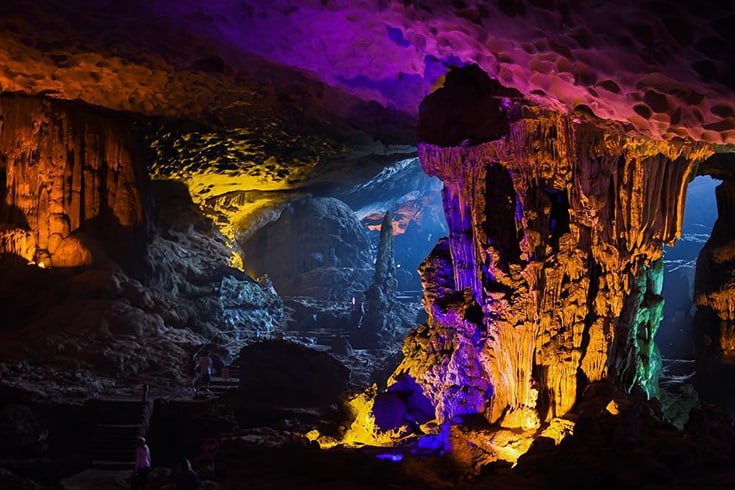
As a unique Cave in Halong Bay Vietnam, Trong Cave features two massive gates connected by an east-west passage.
-
The Guardian Column: A striking, straight stalactite stands at the entrance, symbolizing the legendary fisherman.
-
The “Drum” Sound: The geological structure of the eastern entrance allows wind to resonate against the cliffs, creating a deep, booming sound that gives the cave its name.
-
Glittering Formations: The interior is adorned with silvery stalactites that create a glitzy, ethereal atmosphere, especially when caught in the natural light of the dual entrances.
Me Cung Cave (Maze Cave) – One of Halong Bay’s most intricate caverns
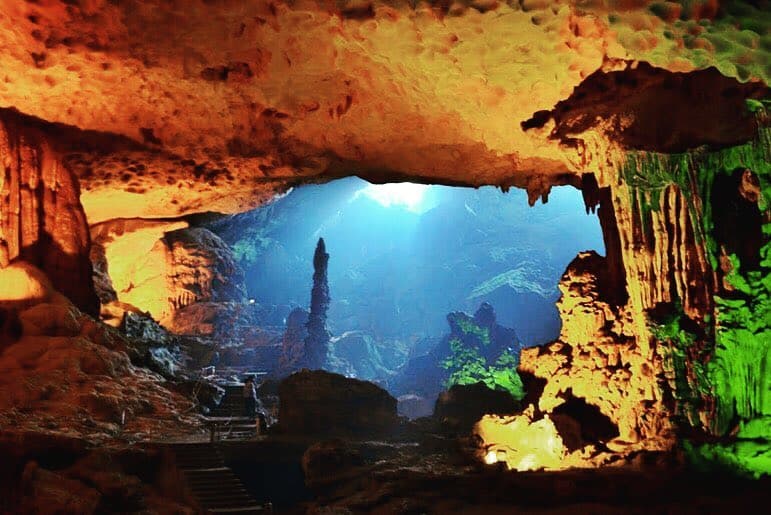
Archaeologists recognize Me Cung Cave as one of the earliest cultural sites in the region, dating back 7,000 to 10,000 years. Perched 25 meters above sea level, this cave in Halong Bay appears from a distance like a secret dwelling tucked into the mountainside.
The Origin of the Name Many consider Me Cung the best cave in Halong Bay for those who love mystery. Its name, which translates to “Maze,” comes from its intricate structure of multiple levels and chambers. Walking through the 100-meter passage, visitors often feel as though they are wandering through an elaborate, natural labyrinth.
Highlights of the Cave While the entrance is narrow, the interior opens into a grand palace of limestone “chandeliers” and stone curtains. Beyond its beauty, it is a famous cave in Halong Bay for its scientific value, containing fossilized marine shells and evidence of Stone Age inhabitants.
The journey concludes at Me Cung Lake, a secluded oasis surrounded by peaks. This airtight ecological zone supports a diverse range of corals and sea creatures, making it a unique treasure among any cave in Halong Bay.
Luon Cave – Halong Bay’s unusual arch-shaped cave
The Origin of the Name
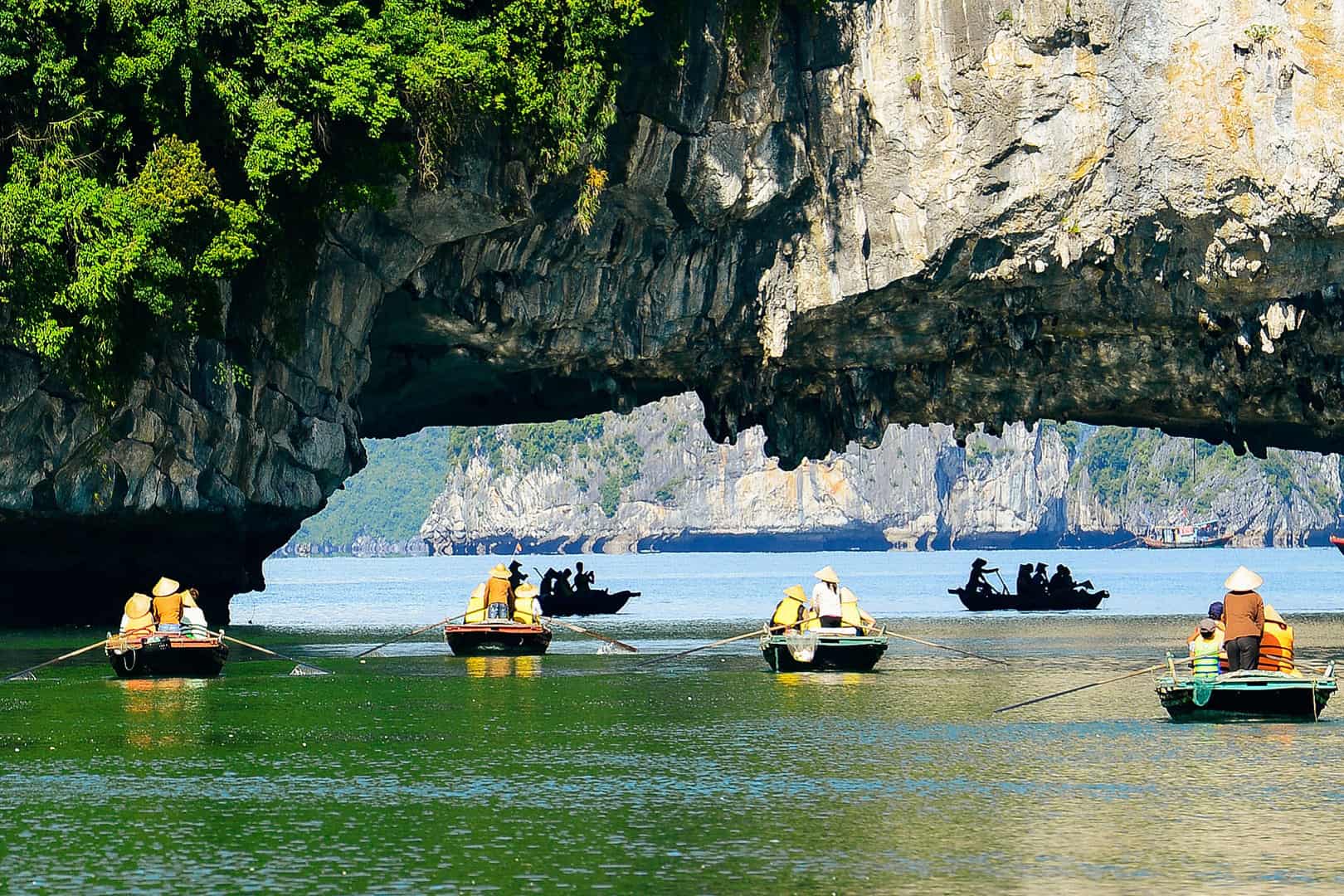
Luon Cave is one of the most unique geological formations in the region. Unlike a typical famous cave in Halong Bay that you explore on foot, Luon Cave is a “tunnel” style water grotto. The name “Luon” (meaning “to crawl through”) refers to the way boats must pass under a low, 100-meter-long stone arch to reach a secluded, emerald lake hidden within a circle of mountains.
Highlights of the Cave
For many travelers, this is the best cave in Halong Bay for water activities. Depending on the tide, the arch stands only 2.5 to 4 meters high. To enter this Cave in Halong Bay Vietnam, you can either paddle your own kayak or board a traditional bamboo boat rowed by a local.
Inside the hidden lagoon, you’ll find:
-
Golden Monkeys: Playful troops of monkeys often climb the steep, lush cliffs surrounding the lake.
-
Pristine Ecosystem: The cliffs are draped in orchids and ancient trees, reflected in the mirror-like water.
-
Ancient Fossils: Like other significant caves in Halong Bay, fossilized freshwater shells on the walls provide evidence of prehistoric settlements.
A visit here offers a rare moment of absolute tranquility, making it a must-see for anyone seeking the natural soul of the bay.
Thien Cung Cave (Paradise Cave)
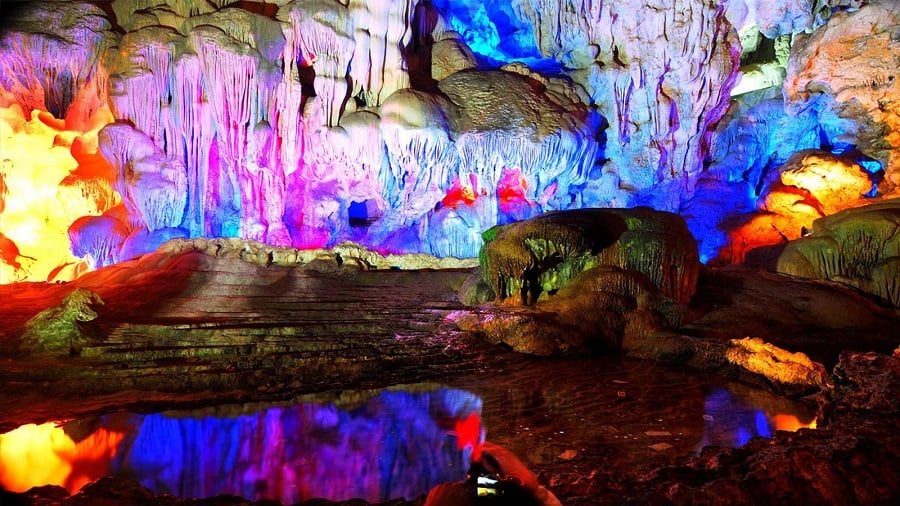
Rated as one of the most archaic and magnificent grottos, Thien Cung Cave is a masterpiece of nature. Spanning roughly 10,000 square meters, its complex interior features multiple levels and soaring ceilings adorned with an incredible system of uniquely shaped stalactites.
The Origin of the Name
This famous cave in Halong Bay is steeped in the legend of the Dragon King and his wedding to a woman named May. The myth tells of a grand celebration attended by dragons, eagles, and pythons, with the festivities “etched” into the stone walls. This divine history earned it the name Thien Cung, or “Heavenly Palace.”
Highlights of the Cave
As the best cave in Halong Bay for lovers of mythology, Thien Cung offers several wonders:
-
Natural Murals: The eastern walls appear like massive paintings of singing fairies and characters from ancient tales.
-
The Four Pillars: Massive central columns are naturally carved with shapes of birds, flowers, and scenes of daily life.
-
The Ancestral Legend: Legend says the Dragon Prince and May raised 100 children here, half of whom stayed to protect the bay—becoming the ancestors of the Vietnamese people.
Every cave in Halong Bay offers a unique story. Whether you choose to explore the grand chambers of Sung Sot or the mystical tunnels of Luon, understanding each Cave in Halong Bay Vietnam will help you plan the perfect journey to this Natural Wonder.
Dark & Bright Cave (Hang Sáng Tối)

The Origin of the Name:
The name refers to the two distinct parts of the cave. The “Dark” section is a long, low-ceilinged tunnel that requires a flashlight to navigate, while the “Bright” section refers to the radiant, sun-drenched lagoon that awaits at the end of the tunnel.
Highlights of the Cave:
This is the best cave in Halong Bay for kayaking. The enclosed lagoon is a biological sanctuary where you can often spot the rare Cat Ba Langur (a golden-headed monkey) on the cliffs. The contrast between the dark limestone tunnel and the sparkling emerald water of the hidden lake is truly breathtaking.
Thien Canh Son Cave

The Origin of the Name:
Often called the “Mountain of the Heavenly View,” the name reflects the spectacular panoramic scenery visible from the cave’s mouth. Locally, it was also known as Hang Co (Grass Cave) because of the lush greenery that surrounds the entrance.
Highlights of the Cave:
Located in the quieter Bai Tu Long Bay, this famous cave in Halong Bay features three chambers filled with thousands of sparkling stalactites that resemble “hanging lamps” or “lotus flowers.” After exploring the interior, you can relax on the white sandy beach located right at the foot of the cave.
Tien Ong Cave
The Origin of the Name:
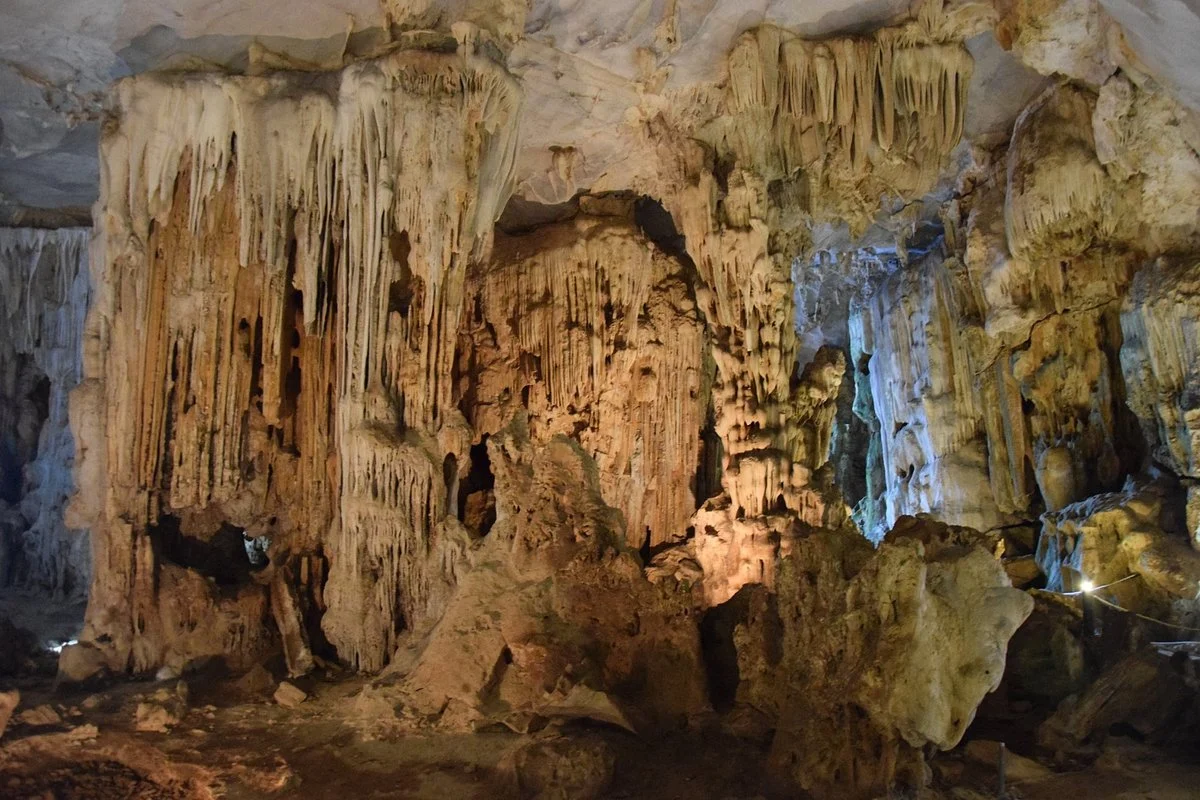
The cave is named after a massive stalagmite that looks like a benevolent old man with a long white beard, known in Vietnamese folklore as a “Tien Ong” or Fairy Godfather.
Highlights of the Cave:
This is a top choice for those who visit Vietnam to see historical sites. It serves as an archaeological museum, containing fossilized shells and stone tools from the Soi Nhu culture (10,000–8,000 BCE). The entrance is massive and horseshoe-shaped, letting in plenty of natural light to illuminate the ancient floor.
Trinh Nu Cave (Virgin Cave)
The Origin of the Name:
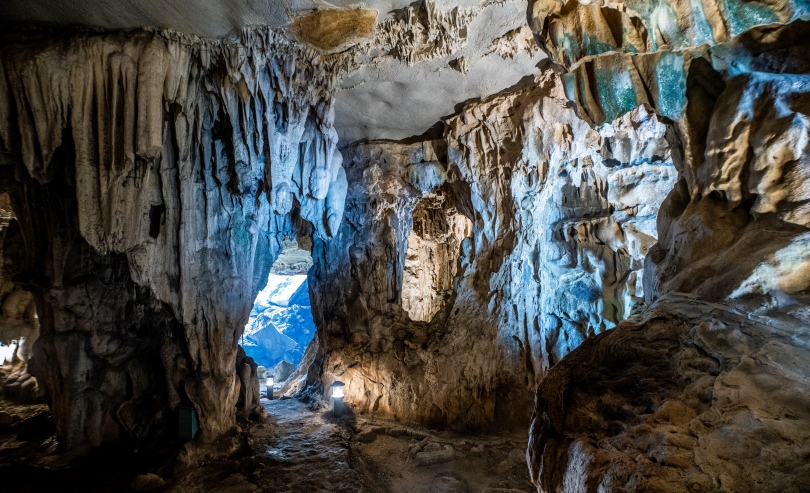
Linked to the tragic legend of Trong Cave, this cave in Halong Bay is named after a young girl who was turned to stone while waiting for her lover. A stalagmite near the entrance clearly resembles a woman with long hair looking toward the horizon.
Highlights of the Cave:
Beyond the poignant legend, this cave is a favorite for high-end travelers. Because of its flat floor and sheltered location, it is a famous cave in Halong Bay for hosting private, luxury “Cave Dinners,” where the interior is lit by hundreds of candles.
Kim Quy Cave (Golden Tortoise Cave)
The Origin of the Name:
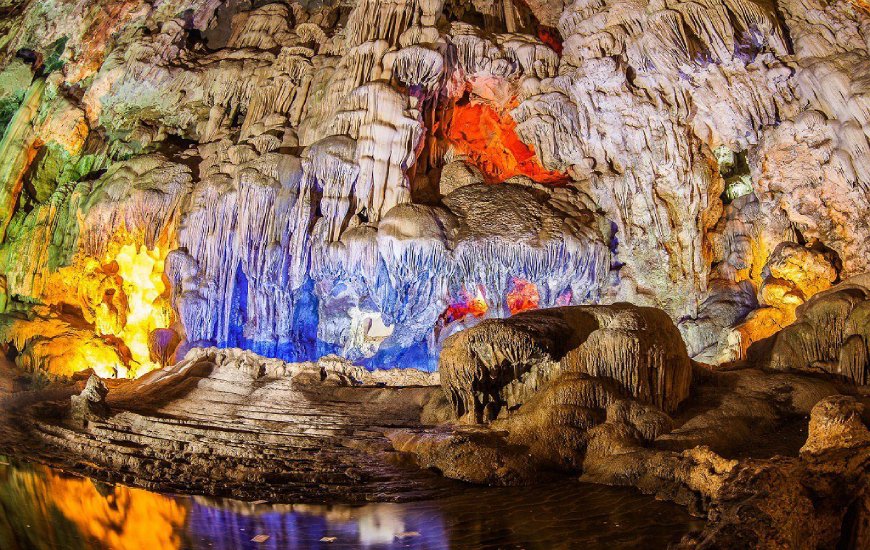
The name comes from the legend of the Golden Tortoise (Kim Quy) who helped Emperor Le Loi return his sacred sword. It is said the tortoise, after finishing its task, swam to Halong Bay to rest, eventually turning into the stone formation found inside.
Highlights of the Cave:
This cave is famous for its “white stone forest.” The stalactites here are exceptionally white and delicate compared to other caves. It is also quite high, with some chambers reaching 30 meters, and features a constant stream of fresh water trickling down the walls like a natural fountain.
In Conclusion
Whether you are paddling through the hidden lagoons of Luon Cave or marveling at the “Heavenly Palace” of Thien Cung, exploring a Cave in Halong Bay Vietnam is the ultimate highlight of any journey. These geological wonders, ranging from ancient archaeological sites to legendary chambers of love and war, offer a profound connection to the natural beauty and folklore of the region.
The best way to travel Vietnam is to immerse yourself in these unique landscapes, but navigating the many cruise routes and cave options can be overwhelming. Understanding how to travel to Vietnam and choosing the right itinerary is key to a stress-free adventure. From the famous stalactites of Sung Sot to the secluded tranquility of Thien Canh Son, there is a perfect cavern waiting for every type of traveler.
Ready to visit Vietnam and witness these subterranean masterpieces for yourself? Let the experts handle the details so you can focus on the wonder. Contact Vietnam Tour 247 today to book your custom Halong Bay cruise and secure your journey to the most famous cave in Halong Bay!
FAQs
1. Which is the best cave in Halong Bay to visit for the first time?
Most travelers consider Sung Sot (Surprise) Cave the must-see. As the most famous cave in Halong Bay, it offers the grandest chambers and is conveniently located on the main cruise routes. If you prefer something more active, Luon Cave is the best choice for kayaking.
2. Are the caves difficult to hike or accessible for seniors?
Most caves, like Thien Cung or Sung Sot, require climbing 50 to 200 stone steps to reach the entrance. While they are well-lit and have paved paths inside, they may be challenging for those with severe mobility issues. For the easiest access, a bamboo boat trip through Luon Cave requires no climbing at all.
3. What is the best way to travel Vietnam to ensure I see the hidden, less-crowded caves?
The best way to travel Vietnam’s coast while avoiding crowds is to book a cruise that sails through Bai Tu Long Bay or Lan Ha Bay. These routes visit quieter gems like Thien Canh Son or Dark & Bright Cave, offering a more peaceful experience than the busier central Halong routes.
4. Can I visit a cave in Halong Bay Vietnam during the rainy season?
Yes, caves are great “all-weather” attractions because they provide shelter from the rain. However, if there is a heavy storm or typhoon (most common in August and September), the authorities may cancel all boat departures for safety. Always check the weather when planning how to travel to Vietnam.
5. Do I need to bring special gear to explore a cave in Halong Bay?
Standard walking shoes or sturdy sandals are sufficient, as the paths can be slippery. You don’t need professional climbing gear. However, bringing a waterproof bag for your phone or camera is highly recommended, especially if you are visiting water caves like Luon or the Dark & Bright Cave via kayak.
Read more:
Ninh Binh or Halong Bay? Discover Amazing Landscapes in 2026