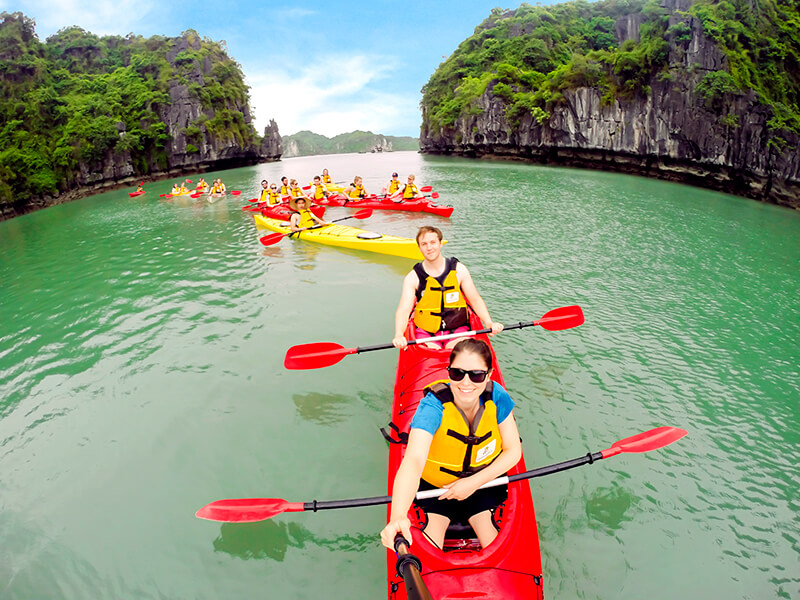
From the towering limestone karsts of the north to the sun-drenched islands of the south, kayaking locations in Vietnam offers a perspective that luxury cruises and bus tours simply cannot match. Whether you’re gliding through 400-million-year-old caves or navigating the “coconut highways” of the Mekong Delta, this guide reveals the most spectacular kayaking locations in Vietnam for 2026.
Overview of kayaking locations in Vietnam
Vietnam offers some of the most spectacular water adventures in Southeast Asia, ranging from mystical emerald bays to dramatic mountain canyons. Exploring kayaking locations in Vietnam allows travelers to access hidden lagoons and remote fishing villages that larger vessels simply cannot reach.
Iconic Northern Waterways
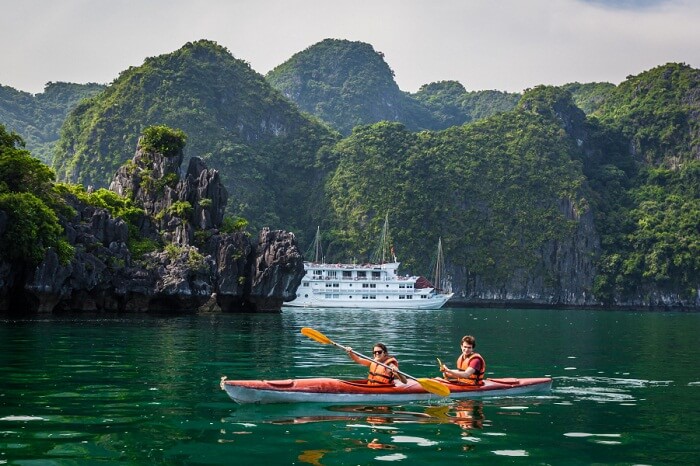
The most famous kayaking places in Vietnam are found in the North. Ha Long Bay and its quieter neighbor, Lan Ha Bay, feature thousands of limestone karsts and secret caves like Luon Cave and Bright & Dark Cave. For a freshwater thrill, the Nho Que River in Ha Giang offers a breathtaking paddle through Tu San Gorge, the deepest canyon in the region, while Ba Be Lake provides a serene escape surrounded by primary rainforest.
Central and Southern Gems
In Central Vietnam, the Phong Nha-Ke Bang cave system allows you to paddle directly into colossal wet caves. For a cultural touch, Hoi An offers sunset kayaking through the Bay Mau Coconut Forest. Moving South, the Mekong Delta is a labyrinth of palm-shaded canals perfect for observing rural life. If you prefer the open sea, Phu Quoc Island and Con Dao are premier kayaking places in Vietnam for crystal-clear water and coral reef exploration.
Whether you are seeking the misty pine forests of Tuyen Lam Lake in Da Lat or the vibrant urban energy of West Lake in Hanoi, the diverse kayaking locations in Vietnam cater to every level of adventurer.
Why Kayaking is a Must-Do Activity in Vietnam
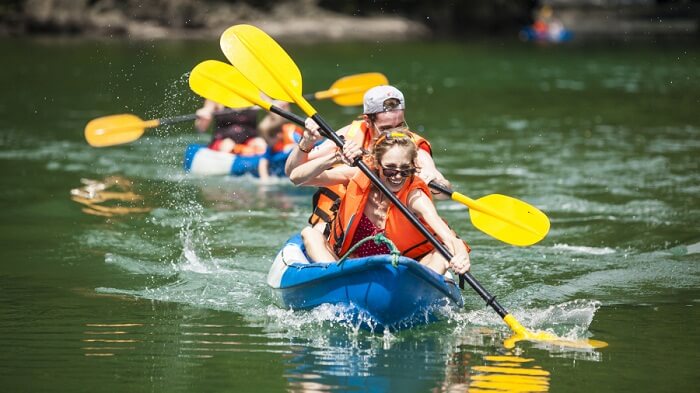
While there are many ways to see the country, Vietnam kayaking has become a premier choice for travelers seeking an intimate connection with nature.
- Access the Inaccessible: Many of the most beautiful lagoons and caves in Ha Long Bay or Phong Nha have entrances so low that only a kayak can slip through.
- Eco-Friendly Exploration: As Vietnam moves toward sustainable tourism, kayaking remains the cleanest way to visit fragile ecosystems like the Ba Mau Coconut Forest or Cat Ba’s monkey-inhabited shores.
- Wildlife Encounters: Without the roar of an engine, you are far more likely to see the rare Cat Ba Langur, soaring eagles, or the diverse birdlife of the Mekong Delta.
- Photography: For creators, a kayak provides the ultimate low-angle shot of limestone peaks reflected in mirror-still water.
Iconic Kayaking Locations in Vietnam: The Northern Circuit
The North is the spiritual home of kayaking in Vietnam, characterized by dramatic vertical landscapes and emerald waters.
Ha Long Bay (Quang Ninh)
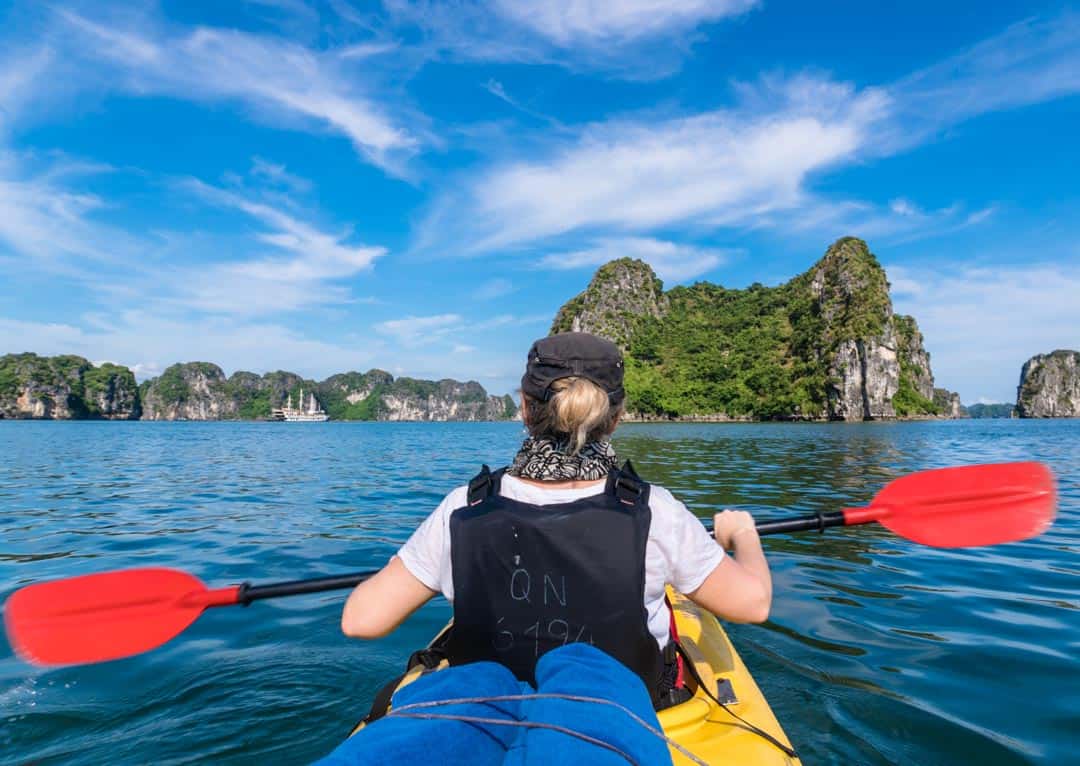
Undisputedly the most famous kayaking place in Vietnam, Ha Long Bay is a UNESCO World Heritage site and has been ranked by National Geographic as one of the top 25 kayaking destinations globally.
- Top Spots: Luon Cave (home to golden monkeys), Vung Vieng Fishing Village, and Cong Do Area.
- The Experience: Paddling through “Surprise Cave” or floating past ancient houseboats where locals have lived for generations.
Lan Ha Bay & Cat Ba Island (Hai Phong)
If you find Ha Long too busy, Lan Ha Bay is the “hidden twin.” It features the same karst beauty but with significantly fewer cruise ships.
- Top Spots: Ao Ech Lagoon and Dark & Bright Cave.
- The Experience: The water here is often clearer than in Ha Long, making it ideal for combining kayaking with a quick swim at secluded beaches like Van Boi.
Nho Que River (Ha Giang)
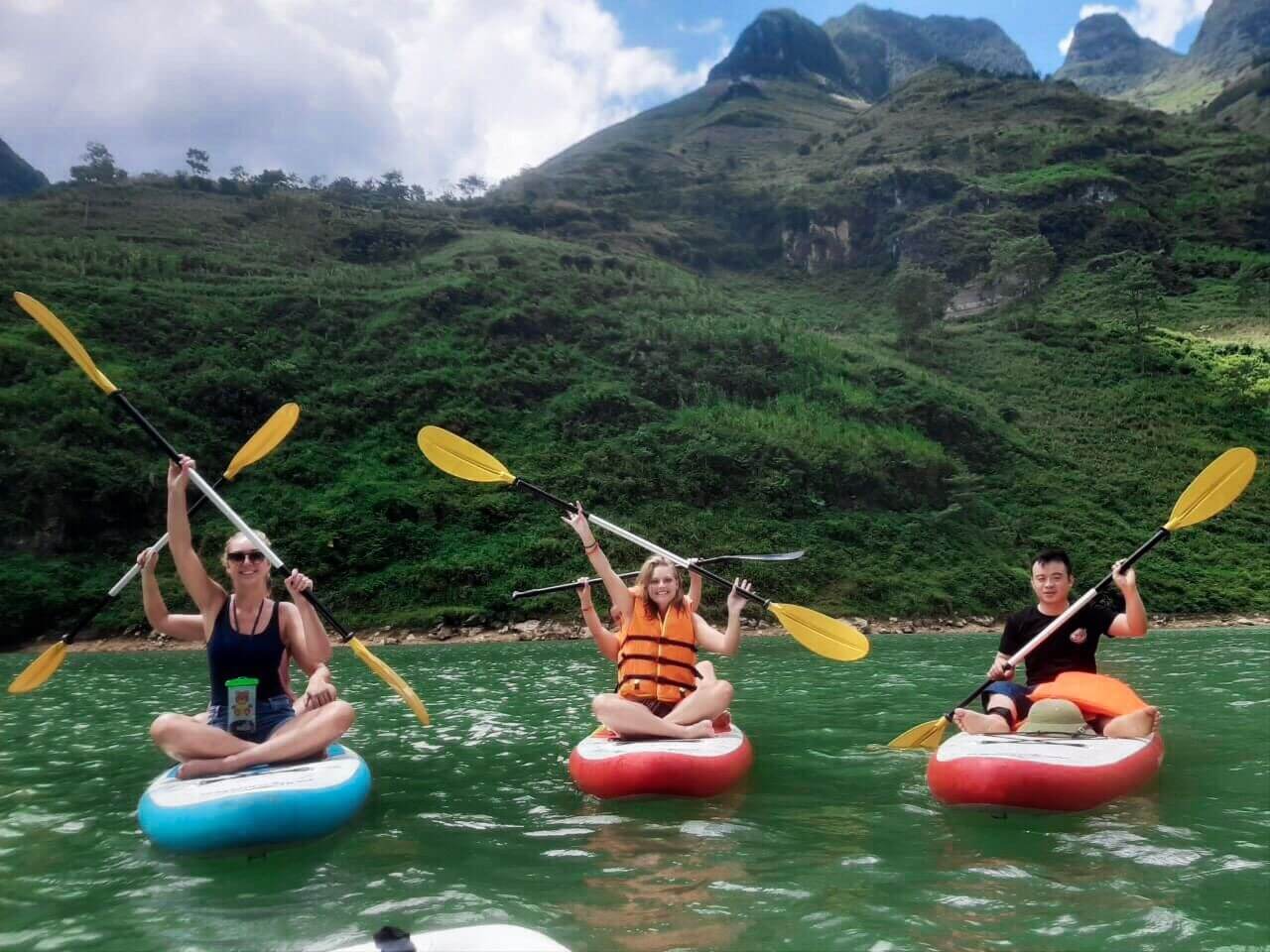
Located at the base of the legendary Ma Pi Leng Pass, this is one of the most breathtaking kayaking places in Vietnam. The water is a surreal, bright emerald green. Towering cliffs rise 800 meters on either side, creating a cathedral-like atmosphere.
- Highlight: Paddling through Tu San Canyon, the deepest canyon in Southeast Asia.
- Price: Around 100,000 – 150,000 VND ($4–6 USD) per person.
Ba Be Lake (Bac Kan)
For a freshwater experience, Ba Be Lake is a tranquil oasis surrounded by primary forest. Its navigate to Puong Cave or Dau Dang Waterfall. The lake is so calm it feels like paddling on a giant mirror. It’s a perfect spot for those seeking silence and birdwatching.
Central Vietnam: Caves, Rivers, and Ancient Towns
Phong Nha-Ke Bang (Quang Binh)
The “Kingdom of Caves” offers a truly adventurous kayaking in Vietnam experience.
- Son River: Kayak directly into the mouth of Phong Nha Cave. Unlike the tourist boats, a kayak allows you to venture deeper into the darkness to admire the stalactites at your own pace.
- Chay River: Famous for its bright turquoise water and the “Dark Cave” (Hang Toi) where you can combine kayaking with mud baths and ziplining.
Hoi An (Quang Nam)
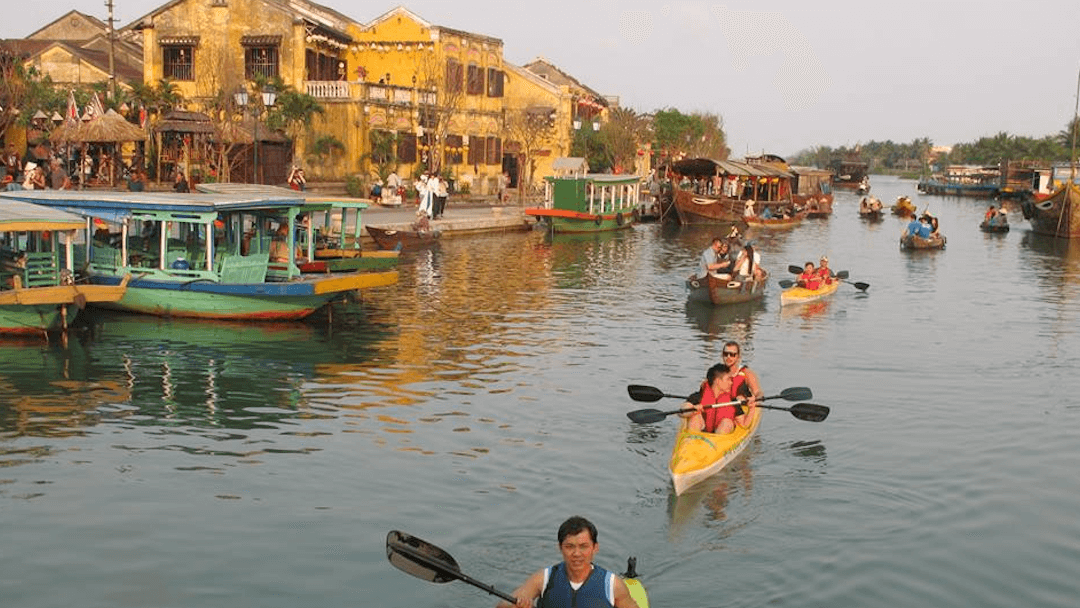
The UNESCO Ancient Town offers two very different paddling vibes.
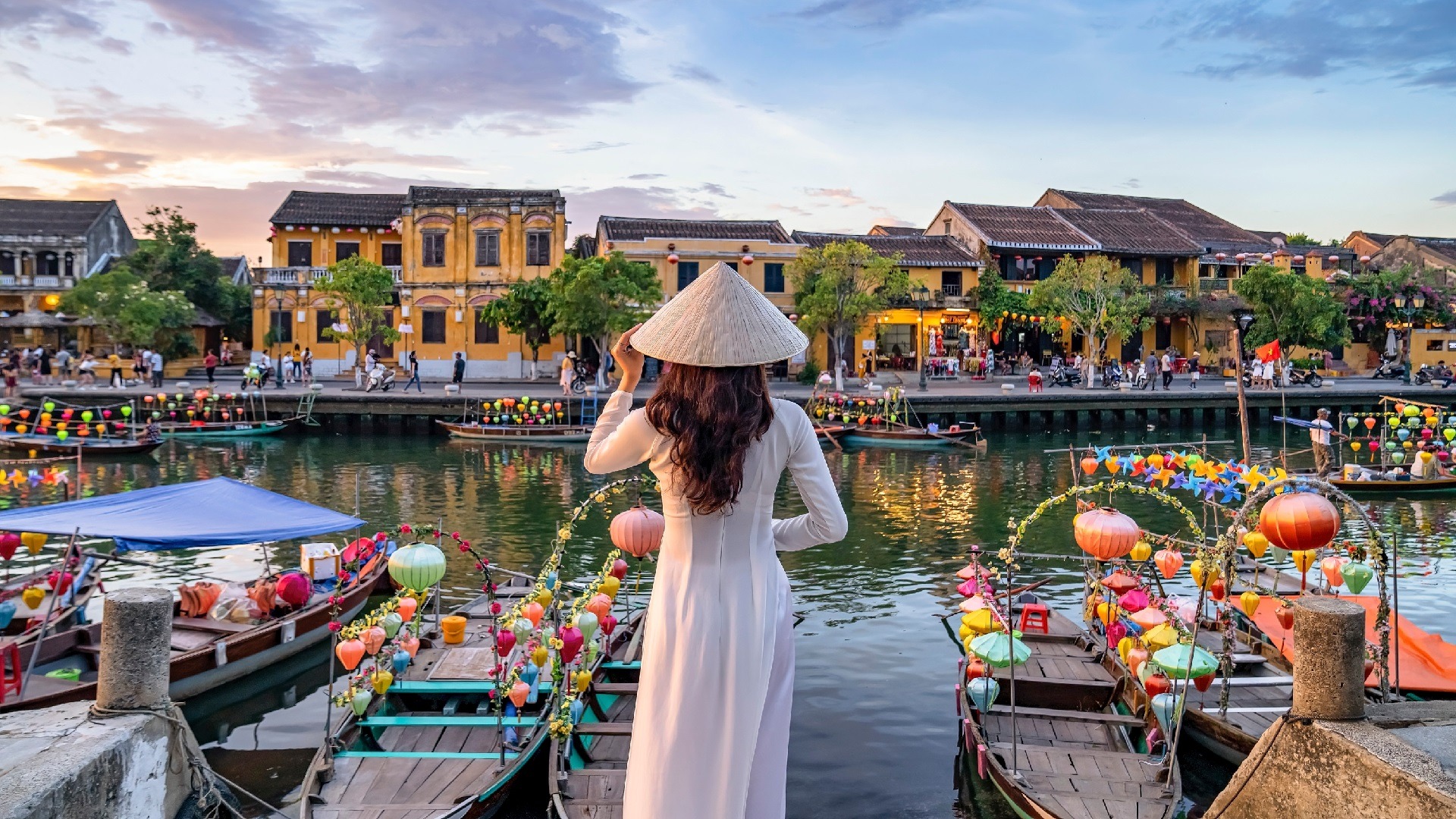
- Thu Bon River: Best at sunset. You can paddle past the iconic yellow houses and under the Bridge Pagoda as the lanterns begin to glow.
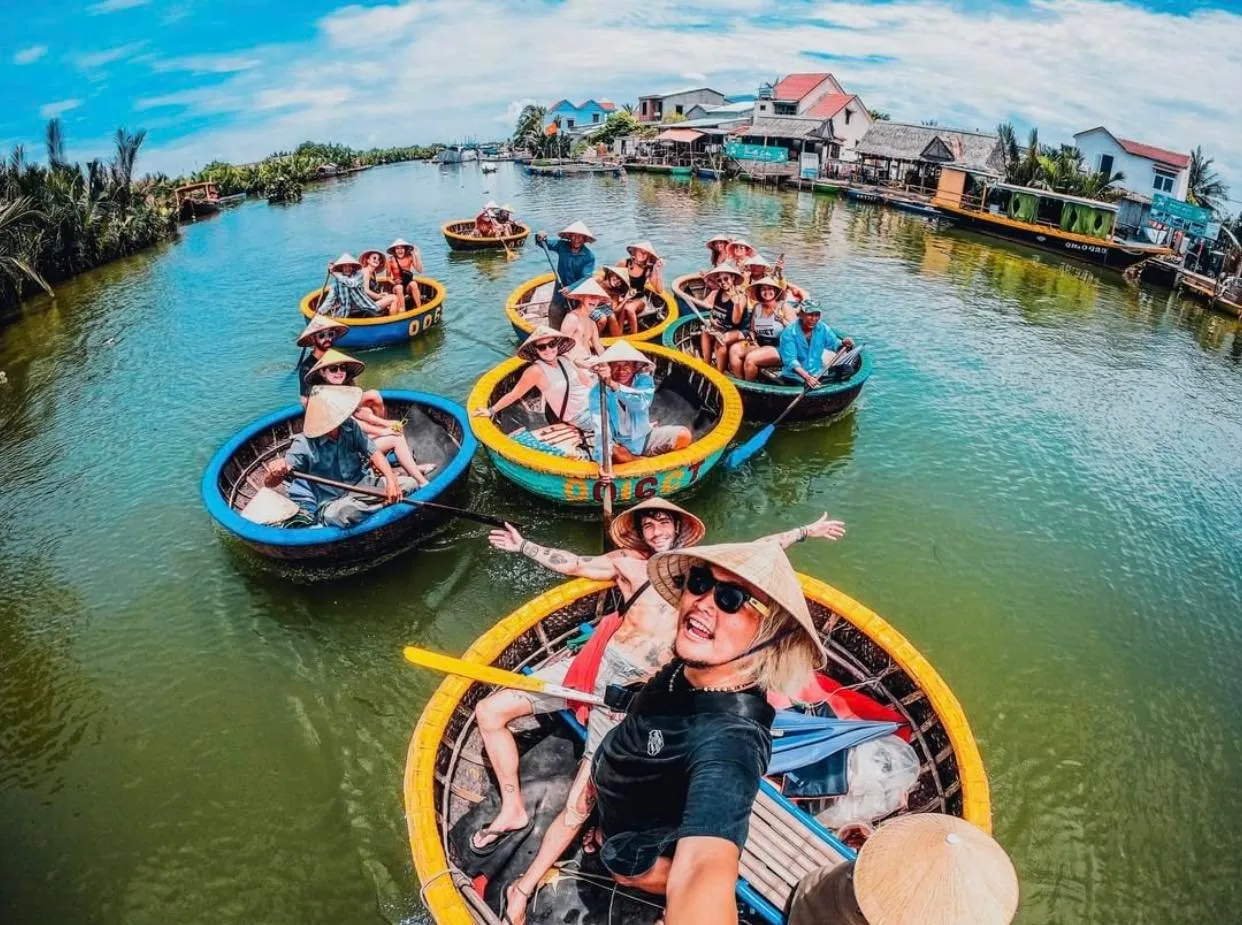
- Bay Mau Coconut Forest: Navigate through narrow “water tunnels” lined with nipa palms. It’s a labyrinthine adventure just minutes from the city center.
Tuyen Lam Lake (Da Lat)
Known as the “Poetic Lake,” this is the most romantic campsite in Vietnam and kayaking spot. The lake is surrounded by pine forests. In late autumn, you can even find areas where maple leaves turn red, a rarity in tropical Vietnam.
The South: Tropical Canals and Island Hopping
The Mekong Delta (Can Tho & Ben Tre)
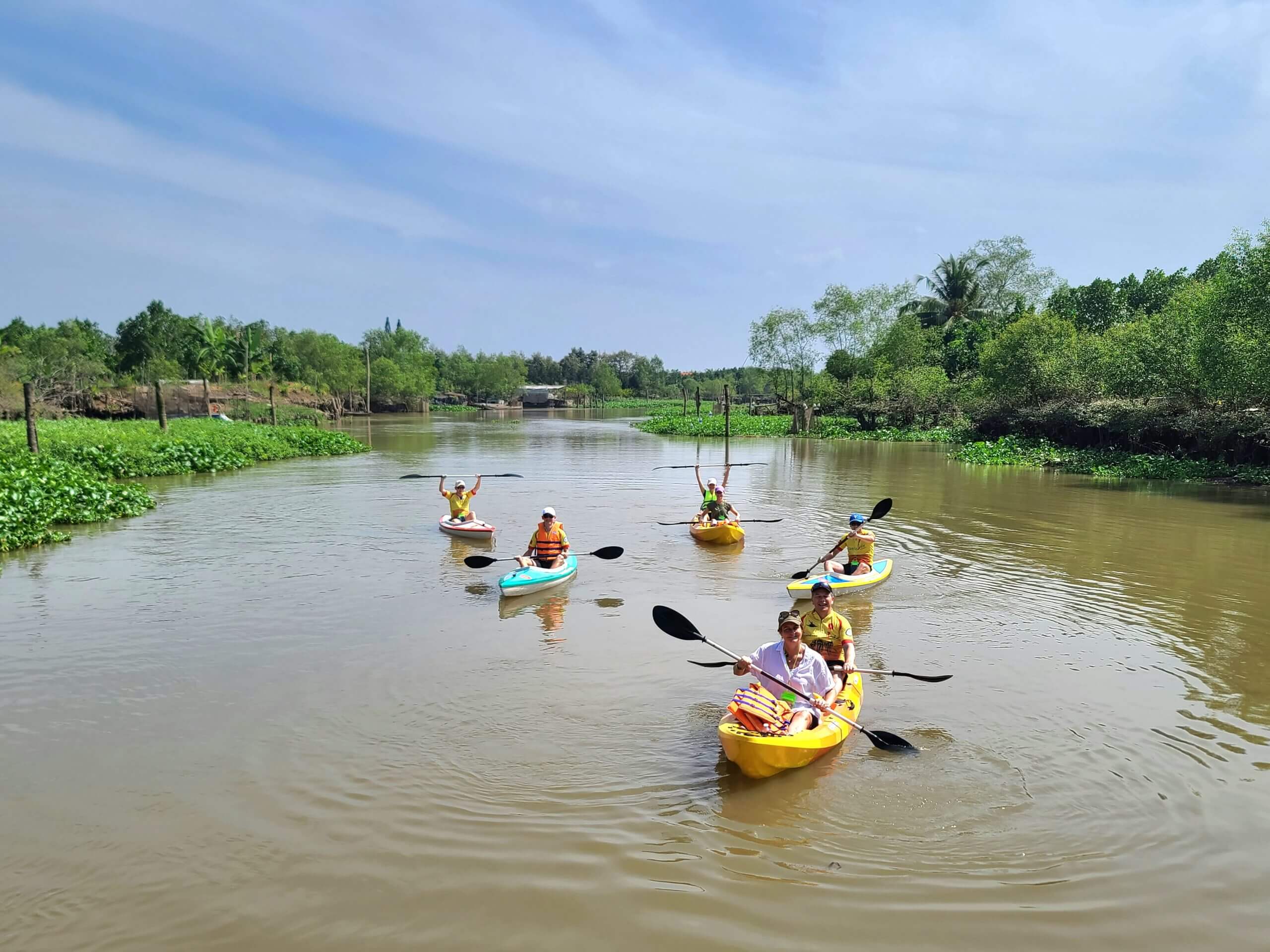
Vietnam kayaking is a cultural immersion. Forget the open sea; here, you are navigating the “arteries” of southern life. Paddle through small canals shaded by fruit orchards and coconut trees. You’ll pass locals washing clothes, children swimming, and boats loaded with durian and dragon fruit.
Phu Quoc Island (Kien Giang)
While famous for its beaches, the Cua Can River is the island’s best-kept kayaking secret. A 20km river that meanders through primeval forests before emptying into the sea. It offers a unique mix of freshwater and saltwater ecosystems in a single trip.
Best time for kayaking in Vietnam
Northern Vietnam (Ha Long Bay, Lan Ha Bay, Nho Que River)
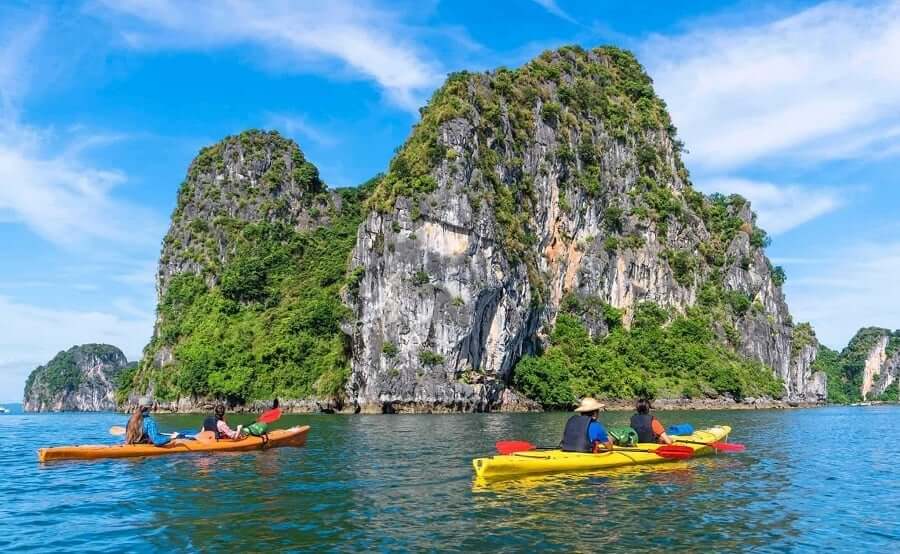
The North has four distinct seasons. For kayaking in Vietnam, you want to avoid the “grey mist” of winter and the “storm surge” of late summer.
The Golden Windows (March to May & September to November):
-
-
Spring (March–May): This is arguably the best time. The water in Ha Long and Lan Ha Bay is calm, and the temperatures (20°C–30°C) are perfect for physical activity without overheating. In Ha Giang, the Nho Que River is a brilliant turquoise, and the weather is crisp.
-
Autumn (September–November): The humidity drops, and the skies turn a deep blue. Visibility is at its peak, making this the best time for photography. The water is still warm enough for a post-kayak swim.
-
The “Caution” Zone (July & August):
This is the peak of the typhoon season. While many days are sunny and beautiful, a storm can lead to an immediate 24–48 hour ban on all water activities. If you book during these months, choose a tour operator with a flexible cancellation policy.
Winter (December–February):
It is dry but cold (10°C–15°C). Kayaking is still possible, but you’ll need a light wetsuit or thermal layers. Expect mystical, heavy fog in the mornings—beautiful, but visibility for long-distance paddling is limited.
Central Vietnam (Phong Nha, Hoi An, Da Nang, Hue)
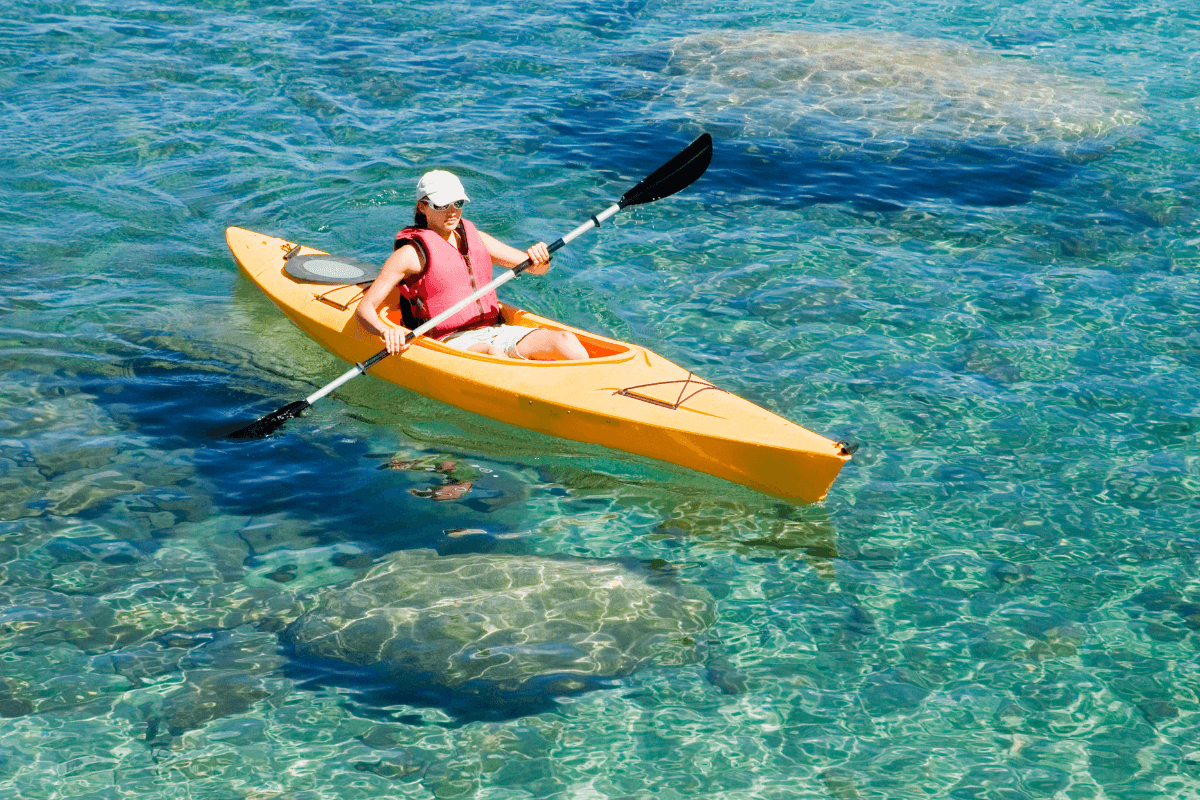
Central Vietnam has a late rainy season compared to the rest of the country. This significantly impacts cave and famous kayaking places in Vietnam.
-
The Dry Peak (April to August):
-
Best for Caves: During these months, water levels in Phong Nha are low and stable, allowing you to kayak deep into the caves (like Dark Cave or Phong Nha Cave).
-
Best for Hoi An: The Thu Bon River is gentle, and the Bay Mau Coconut Forest offers cooling shade.
-
Note: July and August can be extremely hot (up to 38°C), so plan your kayaking for sunrise or late afternoon.
-
-
The “Avoid” Period (October to December):
-
Flood Risk: This is the peak flood season. In Hoi An, the ancient town can literally become a “mini-Venice” where you can kayak through the streets, but most official tours are suspended.
-
Cave Closures: In Phong Nha, heavy rains cause river levels to rise rapidly, often sealing off cave entrances and making the Son River too dangerous for paddling.
-
Southern Vietnam (Mekong Delta, Phu Quoc, Con Dao)
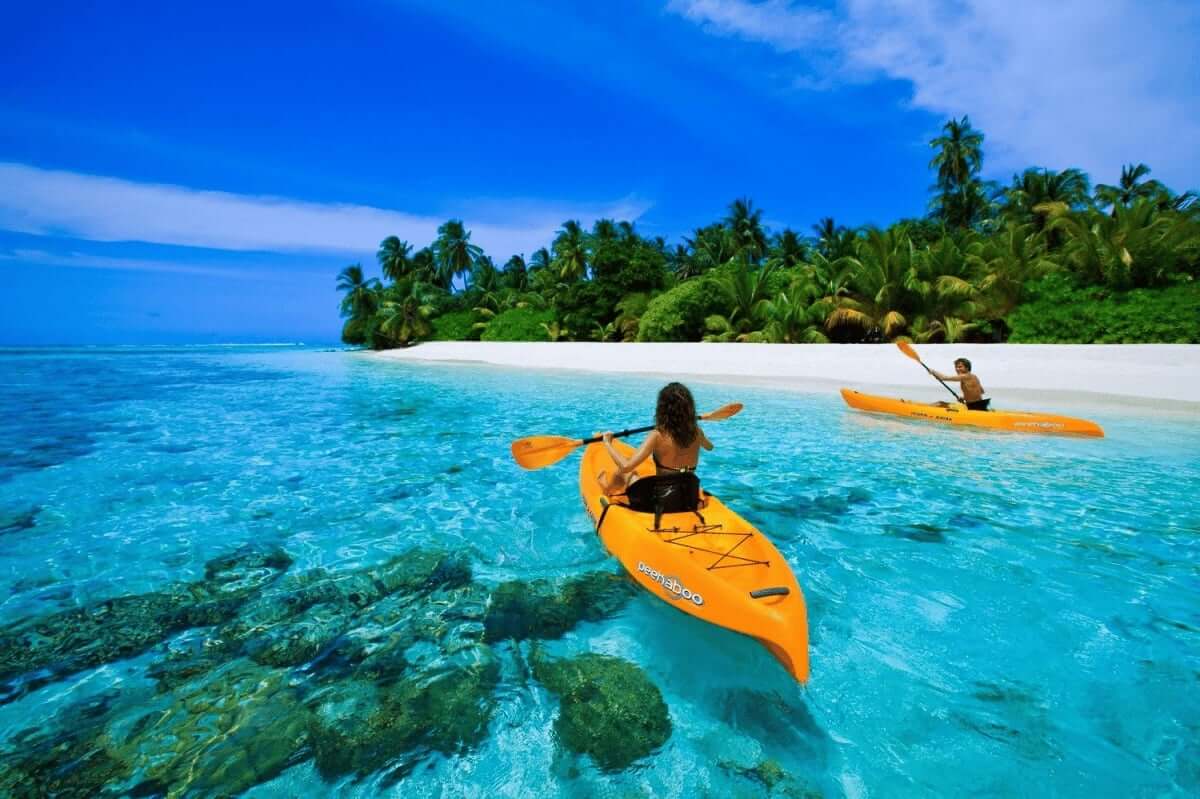
The South is simpler: it’s either sunny or it’s a tropical downpour.
-
-
The Ideal Season (November to April):
-
Phu Quoc & Islands: This is the “Dry Season.” The sea is like a swimming pool—crystal clear and flat. It is the only time you should attempt sea kayaking to offshore islets in the An Thoi Archipelago.
-
Mekong Delta: The air is less humid and the “Floating Season” (Sept–Nov) has just ended, leaving the canals lush and full but safe to navigate.
-
-
The Rainy Season (May to October):
-
You can still kayak, but expect “flash rain”—intense, 1-hour downpours usually in the afternoon.
-
-
Notable things must prepare
What to Pack
- Dry Bags: Essential for your camera and phone.
- Sun Protection: The reflection of the sun off the water is intense. Use reef-safe sunscreen.
- Waterproof Case: For those “kayak selfies” in the middle of the bay.
Safety First
- Life Jackets: These are mandatory by law in almost all famous kayaking places in Vietnam.
- Local Regulations: In Ha Long Bay, you must stay within designated kayaking zones to avoid heavy shipping lanes.
- Tides: In coastal areas, check tide charts. Paddling against a strong outgoing tide can be exhausting for beginners.
Conclusion
From the misty mountains of the North to the tropical breeze of the South, the kayaking locations in Vietnam offer something for every level of adventurer. It is the ultimate way to slow down and see the country’s “hidden” side—the one that exists between the limestone cracks and under the forest canopy.
FAQs
1. Is kayaking in Vietnam safe for beginners?
Absolutely. Most kayaking places in Vietnam, such as Ha Long Bay, Lan Ha Bay, and the Mekong Delta, feature very calm waters with minimal current.
- Tandem Kayaks: Most tour operators provide “sit-on-top” tandem kayaks (for 2 people), which are extremely stable and difficult to flip.
- Basic Training: Guides typically provide a 5-minute briefing on how to paddle and steer before you hit the water.
2. Do I need a permit to kayaking in Vietnam?
Generally, no, you do not need to apply for a personal permit.
- Tours & Cruises: The tour operator or cruise company handles all necessary “waterway permissions” for you.
- Solo Kayakers: If you are bringing your own kayak to a National Park (like Ba Be or Cat Tien), you simply pay the park entrance fee. However, some specific zones in Ha Long Bay are restricted to protect the environment, so always follow local signage.
3. What is the average cost of Vietnam kayaking?
Vietnam is one of the most affordable places in the world for water sports:
- Hourly Rental: 40,000 – 100,000 VND ($2–$4 USD) at popular spots like West Lake (Hanoi) or Tuyen Lam Lake (Da Lat).
- Included in Cruises: On most overnight Ha Long/Lan Ha Bay cruises, kayaking is already included in your package price.
- Full-Day Guided Tours: Expect to pay $35 – $60 USD for specialized tours (e.g., sunset kayaking in Hoi An or canyon kayaking in Ha Giang).
4. Can children participate in kayaking in Vietnam?
Yes, children as young as 5 to 10 years old can join, provided they sit in a tandem kayak with an adult. Most reputable operators have child-sized life jackets, but it is always worth checking in advance if you are traveling with very small children.
5. What happens if it rains?
- Light Rain: Most tours continue as scheduled; many travelers find paddling through a light tropical mist in Ha Long Bay quite poetic.
- Storms/Typhoons: During the stormy season (July–September), if a typhoon warning is issued, the Port Authority will cancel all water activities immediately for safety. You will typically be offered a refund or a rescheduled date.
6. Are there eco-friendly rules I should follow?
Vietnam’s waterways are beautiful but face pollution challenges. To be a responsible traveler:
- Reef-Safe Sunscreen: Protect the marine life in places like Phu Quoc.
- No Littering: It is strictly forbidden to throw anything overboard. Some tours in Hoi An even offer “Cleanup Kayaking” where you get a discount for collecting floating plastic.
- Distance from Wildlife: If you see the rare Cat Ba Langur or monkeys in the caves, keep a distance of at least 10–15 meters to avoid distressing them.
7. What should I wear for kayaking in Vietnam?
- Clothing: Lightweight, quick-dry fabrics (like gym gear or swimwear) are best. Avoid heavy denim or cotton, which becomes heavy when wet.
- Footwear: Flip-flops or waterproof sandals (like Tevas/Chacos). You will likely get your feet wet when getting in and out of the kayak.
- Accessories: A wide-brimmed hat and polarized sunglasses are essential to fight the glare off the water.