Planning a trip to the northernmost,, but the logistical question of how to get to Ha Giang Vietnam is often the first hurdle for travelers. Ha Giang is not just a destination; it is an experience that begins the moment you leave the urban sprawl behind and ascend into the “stone forests” of the Dong Van Karst Plateau.
In this comprehensive 2026 Ha Giang travel guide, we will break down every possible transport route, whether you are coming from the capital or the southern metropolis, to ensure your journey to this UNESCO Global Geopark is seamless and unforgettable.
Overview of Ha Giang travel guide

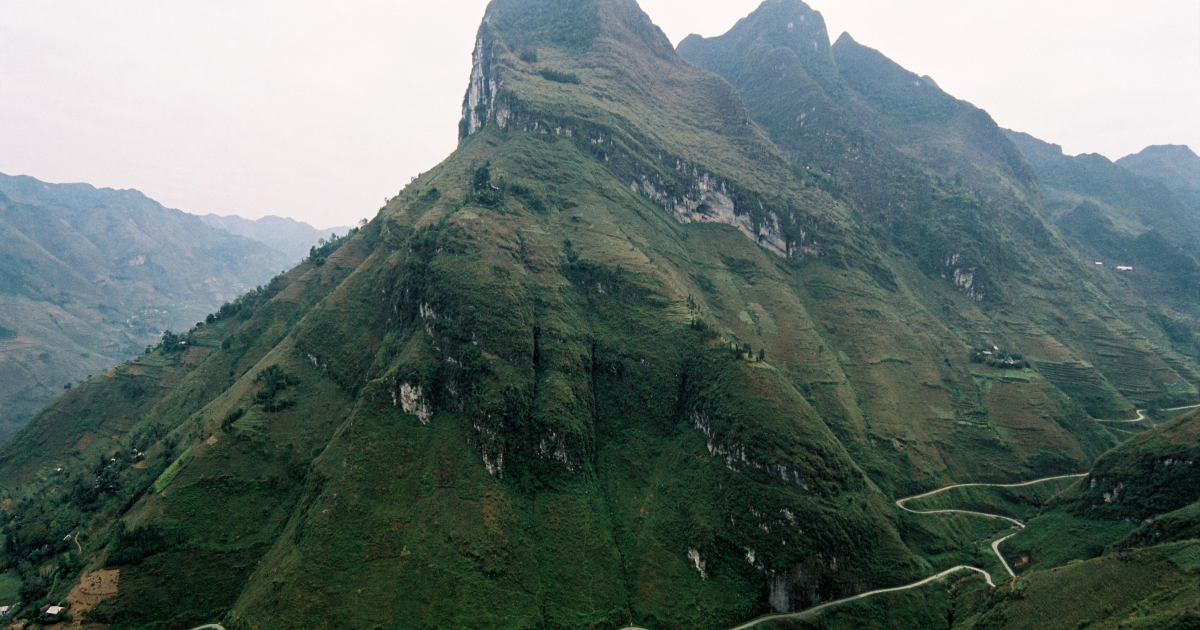
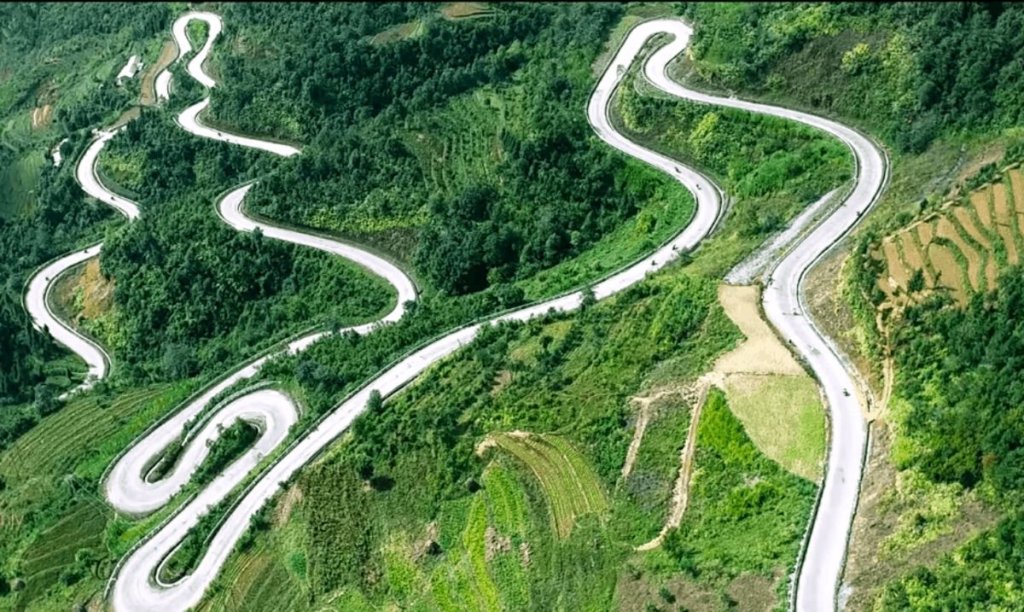
Ha Giang is the final frontier of Vietnamese tourism. Bordering China, this mountainous province is home to 22 ethnic minority groups, each preserving ancient traditions that have vanished elsewhere. Unlike the terraced hills of Sapa, which have become increasingly commercialized, Ha Giang offers a raw, rugged beauty defined by limestone peaks, deep canyons, and the legendary Ha Giang loop.
The province’s crown jewel is the Dong Van Karst Plateau, a place where the landscape feels prehistoric. Travelers come here to challenge themselves against the hair-pin turns of Ma Pi Leng Pass, witness the colorful markets of the H’mong and Dao people, and stand at the northernmost point of Vietnam at the Lung Cu Flag Tower. Because of its remote location, knowing how to get to Ha Giang Vietnam efficiently is key to maximizing your time in the mountains.
Read more: How to travel in Vietnam | Best way to travel Vietnam 2026
How to get to Ha Giang from Ha Noi?
Hanoi is the primary gateway for most adventurers. Located roughly 300 kilometers south of Ha Giang City, the capital offers the most variety in terms of transport. If you are researching how to get to Ha Giang from Ha Noi, you have four main options:
By Private Car
For those seeking comfort and flexibility, hiring a private car is the premium way to travel.
- Travel Time: 6 to 7 hours.
- Pros: You can stop for photos at your leisure, control the air conditioning, and enjoy door-to-door service. This is ideal for families or groups who want to avoid the crowds of public transport.
- Cost: Expect to pay between $120 and $180 USD for a one-way trip depending on the vehicle size.
By Bus (The Most Popular Choice)

The bus system is the backbone of how to get to Ha Giang Vietnam. In 2026, the quality of buses has reached an all-time high.
- Sleeper Buses: These depart from My Dinh Bus Station or Giap Bat Bus Station. They feature bunk-style beds, allowing you to sleep through the night and arrive in Ha Giang City by 4:00 AM or 5:00 AM.
- Limousine Vans: These are 9-seater or 12-seater luxury vans. They are faster than the large buses and offer pick-up from the Hanoi Old Quarter. They are perfect for daytime travel.
- Cabin Buses: The “Royal” experience. These buses feature private pods with curtains, USB chargers, and even massage seats. It is the most comfortable way to endure the 7-hour journey.
By Motorbike
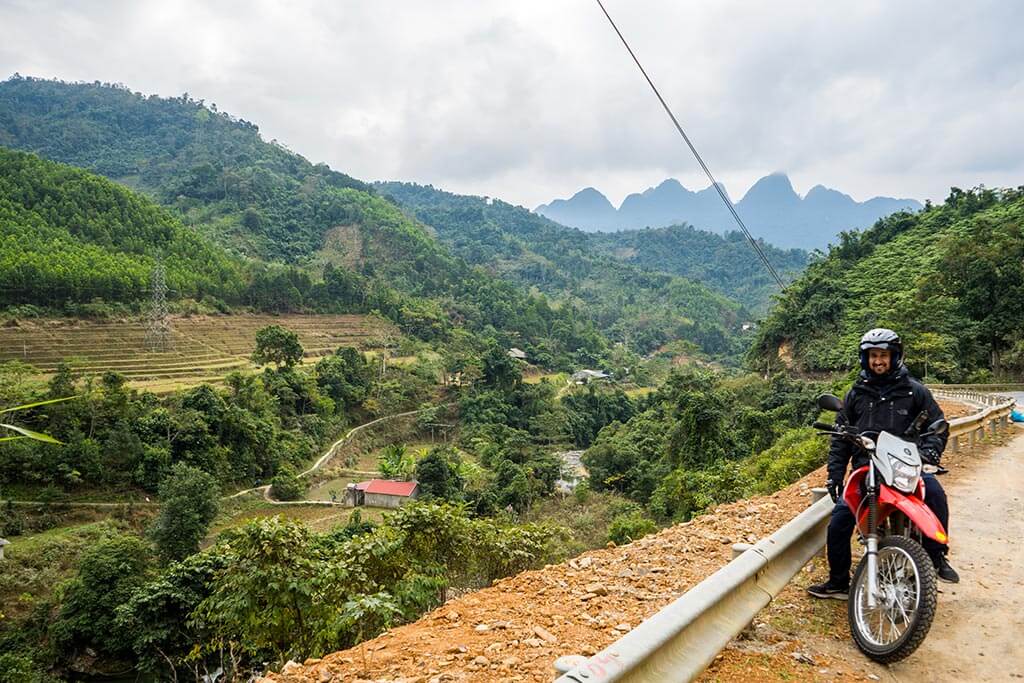
For the “hardcore” adventurer, the journey starts on two wheels.
- The Route: Most riders take Highway QL2 via Vinh Yen and Tuyen Quang.
- Warning: The road from Hanoi to Ha Giang City is largely flat and heavily trafficked by trucks. It is often dusty and not particularly scenic compared to the Ha Giang loop itself. Many travelers prefer to take a bus to Ha Giang City and rent a bike there to save their energy for the mountains.
Read more: Explore The Legendary Motorbike Road Trip Routes In Vietnam 2026
How to get to Ha Giang from Ho Chi Minh?
If you are starting in the south, the distance is nearly 2,000 kilometers. Figuring out how to get to Ha Giang from Ho Chi Minh requires a multi-step approach.
By Plane (Step 1)

Since there is no airport in Ha Giang, your first step is to book a domestic flight from Tan Son Nhat International Airport (SGN) to Noi Bai International Airport (HAN).
- Flight Time: 2 hours and 15 minutes.
- Airlines: Vietnam Airlines, VietJet Air, and Bamboo Airways offer hourly flights.
- Direct Tip: Some luxury bus companies now offer “Airport Pick-up,” meaning a van will meet you at Noi Bai Airport and take you directly to Ha Giang without you needing to enter Hanoi city center.
By Car
Driving a car from Ho Chi Minh City to Ha Giang is a massive undertaking, typically taking 3 to 5 days of driving along the Ho Chi Minh Highway. It is a beautiful road trip, but rarely done by those whose primary goal is the Ha Giang loop.
By Bus
While you could take a series of buses from the south to the north, it is highly impractical. It would take over 40 hours of travel. It is significantly more efficient to fly to Hanoi and then follow the “How to get to Ha Giang from Ha Noi” guide above.
By Motorbike
This is the ultimate trans-Vietnam road trip. Many “backpackers” buy a bike in Saigon and ride all the way to the Chinese border. If you choose this path, ensure you have at least 3 weeks to spare and a very reliable machine.
What to see in the Ha Giang Loop?
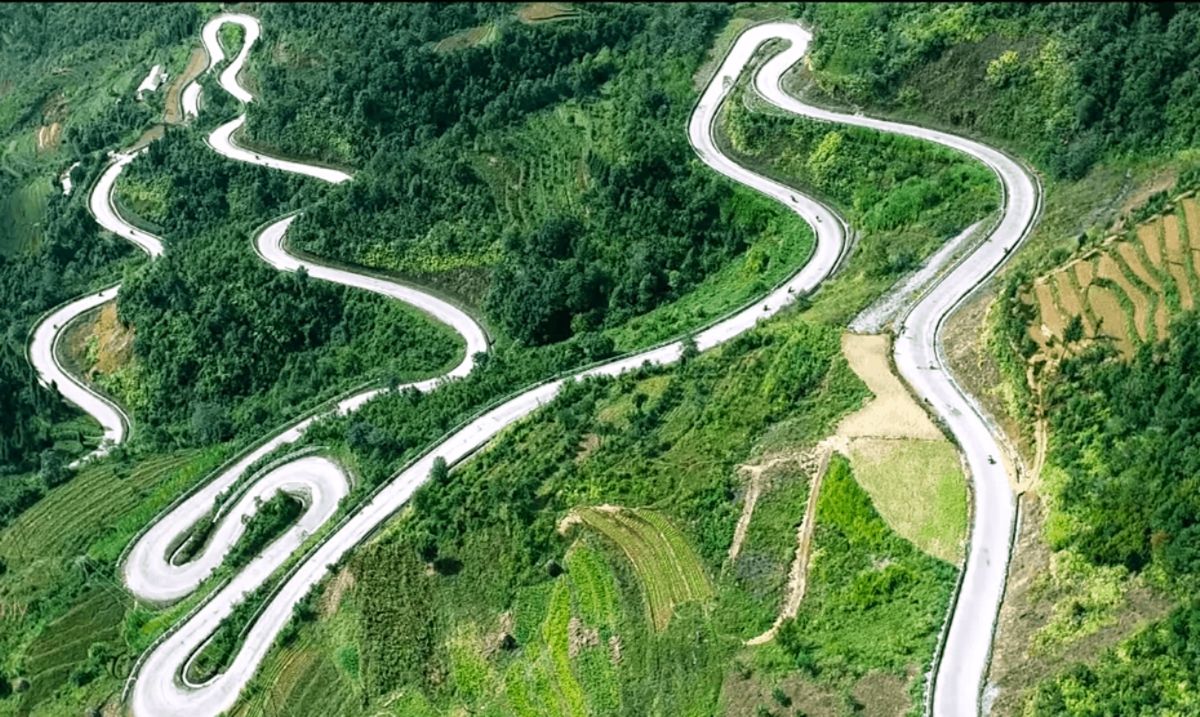
Once you have figured out how to get to Ha Giang Vietnam, the real adventure begins. The Ha Giang loop is a 350km circuit that usually takes 3 to 4 days to complete. Here are the must-see landmarks:
- Quan Ba Heaven Gate: The entrance to the highlands, offering views of the iconic “Twin Mountains.”
- Yen Minh Pine Forest: A serene stretch of road that feels like the European Alps.
- The H’mong King’s Palace: A century-old mansion built with Chinese and French architectural influences, once the center of the opium trade.
- Lung Cu Flag Tower: The northernmost point of Vietnam. Standing here, you can see directly into the mountains of China.
- Ma Pi Leng Pass: The “King of Passes.” The road clings to the side of a cliff with the emerald Nho Que River winding through the canyon 1,000 meters below.
- Dong Van Ancient Town: A perfect place to spend a night, exploring the 100-year-old houses and the vibrant Sunday market.
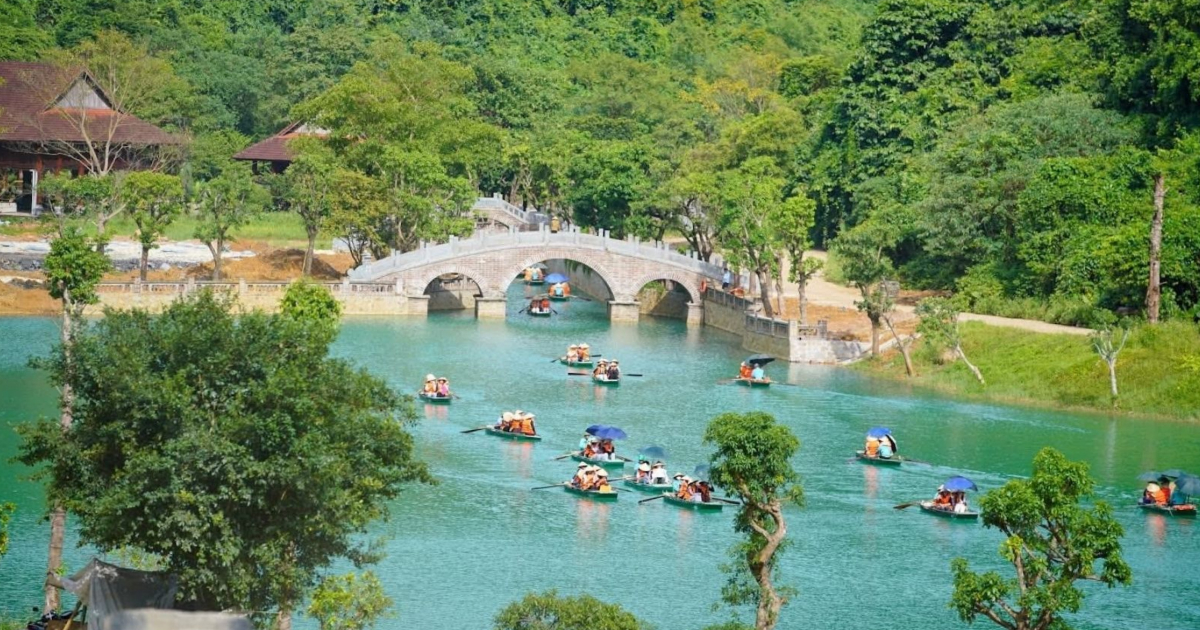
- Tu San Canyon: Take a boat trip on the Nho Que River to look up at the highest canyon walls in Southeast Asia.
What do you need to pack when travelling to Ha Giang?
This Ha Giang travel guide wouldn’t be complete without a packing list. The weather in the mountains is vastly different from the delta.
- Clothing: Even in summer, nights can be cold. Bring a windbreaker and layers. If visiting in winter (November – January), you will need a heavy jacket and thermal wear.
- Safety Gear: If you are riding the Ha Giang loop yourself, a full-face helmet and protective padding (elbow/knee) are essential.
- Permit: You need a “Border Entry Permit” to travel in Ha Giang. You can get this at the Ha Giang Immigration Office for about $10 USD.
- Medical Kit: Carry basic bandages, antiseptic, and stomach medicine. Pharmacies are rare once you leave the main towns.
- Cash: ATMs are only available in major towns (Yen Minh, Dong Van, Meo Vac). Most homestays and local markets only accept cash.
Best time to travel to Ha Giang Vietnam?

The timing of your trip can drastically change your experience of how to get to Ha Giang Vietnam and what you see there.
- September to October (The Golden Season): This is the best time for photographers. The rice terraces in Hoang Su Phi turn a brilliant golden yellow as the harvest approaches. The weather is dry and cool.
- November to December (Buckwheat Flower Season): The rocky plateaus are covered in delicate purple and pink buckwheat flowers. It is the most romantic time to visit, but it can get quite cold.
- January to March (Spring Blossoms): This is when the cherry and plum blossoms bloom, painting the mountains in white and pink. It is also the time for many ethnic festivals.
- May to June (Water Season): The terraces are flooded to prepare for the new crop, looking like giant mirrors on the hillsides.
In addition, when travelling in Northern Vietnam, besides Ha Giang, you also cloud have a plans to experinece other highland locations and join in adventure activities such as trekking, adrenaline travel,…
In Conclusion
Knowing how to get to Ha Giang Vietnam is the first step toward the greatest adventure of your life. Whether you choose the luxury of a cabin bus or the raw challenge of a motorbike ride from Hanoi, the destination is worth every hour of travel.
Ha Giang is a place that demands respect—respect for its winding roads, its diverse cultures, and its sheer, vertical beauty. By following this Ha Giang travel guide, you are well on your way to conquering the Ha Giang loop and discovering the true soul of Northern Vietnam. The mountains are calling; it’s time to go.
FAQs
1. Do I need an international driving permit (IDP) for the Ha Giang loop?
Yes. To legally ride a motorbike over 50cc in Vietnam, you need a valid motorcycle license from your home country and a matching IDP. Police checkpoints are common in Ha Giang to ensure traveler safety.
2. How many days should I spend on the Ha Giang loop?
A: While some do it in 2 days, the recommended time is 3 or 4 days. This allows you to visit the Nho Que River and the Lung Cu Flag Tower without rushing through the dangerous mountain passes.
3. Is there a train from Hanoi to Ha Giang?
No, there is no railway line to Ha Giang. The closest train station is in Lao Cai (near Sapa). From Lao Cai, you would still need to take a 5-hour bus to reach Ha Giang City.
4. Can I get to Ha Giang from Sapa?
Yes! There are daily “minibuses” that connect Sapa and Ha Giang. The journey takes about 6 hours along a winding mountain road. It is a great way to combine the two most famous northern destinations.
5. Is it safe for solo female travelers?
Absolutely. Ha Giang is very safe. However, for the loop itself, many solo travelers choose to join a group tour or hire an “Easy Rider” to ensure they have company and help in case of mechanical issues.