
From the emerald-green rice terraces of the northern highlands to the labyrinthine waterways of the Mekong Delta, cycling tours in Vietnam offer a sensory immersion that no other mode of transport can replicate. To experience cycling Vietnam is to engage with the country at a human pace—where the scent of woodsmoke, the rhythm of local markets, and the cheers of “Hello!” from school children become the soundtrack to your journey.
Whether you are an elite road racer or a casual traveler seeking a slow-paced holiday, cycling and bike tours in Vietnam provide a gateway to hidden corners of the country that remain untouched by mainstream tourism. In this comprehensive guide, we explore the best routes, essential logistics, and expert tips for planning your perfect Vietnam cycling tour
Why Choose Cycling Tours in Vietnam?
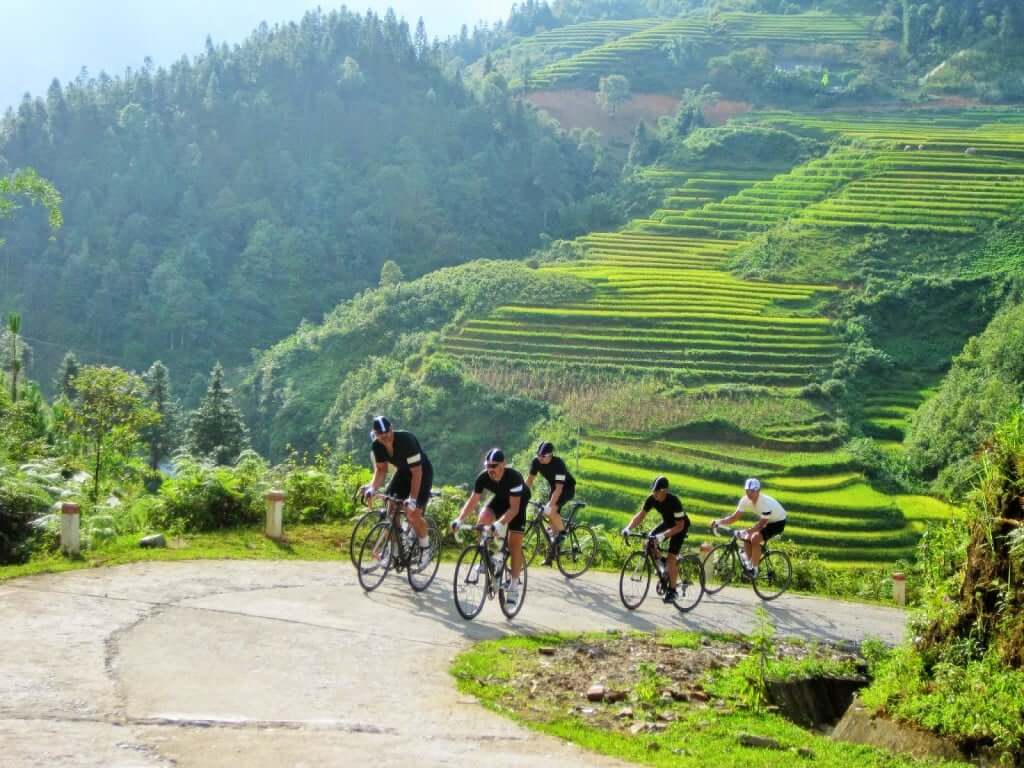
Unlike the blurred views from a bus window, a Vietnam cycling tour puts you in the driver’s seat of your own adventure. Vietnam is uniquely suited for bicycle travel because of its:
- Diverse Topography: You can choose between grueling mountain ascents in the North or perfectly flat, palm-lined paths in the South.
- Cultural Intimacy: Bicycles allow you to navigate narrow village alleys and suspension bridges where cars cannot pass.
- Culinary Rewards: There is no better way to justify a fifth bowl of Pho or a plate of Bánh Xèo than by burning calories on the open road.
- Well-Developed Infrastructure: Vietnam’s secondary road network has improved drastically, offering paved surfaces that wind through stunning rural scenery away from heavy truck traffic.
The Regions for Cycling Vietnam
1. The Northern Highlands: For the Adventure Seekers
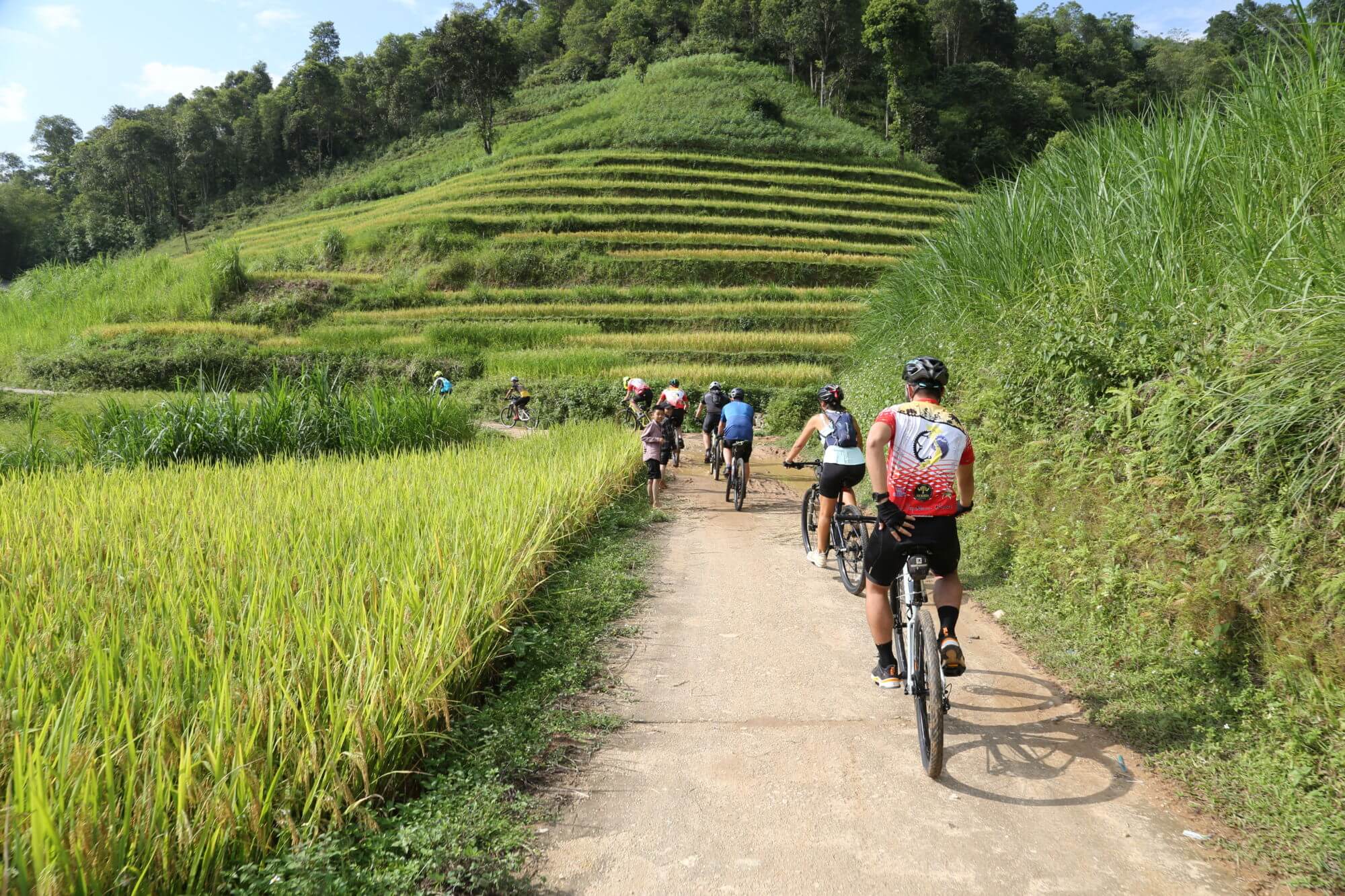
If your idea of the perfect Vietnam cycling tour involves mist-covered peaks and challenging climbs, the North is calling. This region is best suited for mountain biking or sturdy touring bikes.
- Ha Giang Loop: Known as the “Final Frontier,” this route is physically demanding but visually incomparable. You’ll climb through the Dong Van Karst Plateau, a UNESCO Global Geopark.
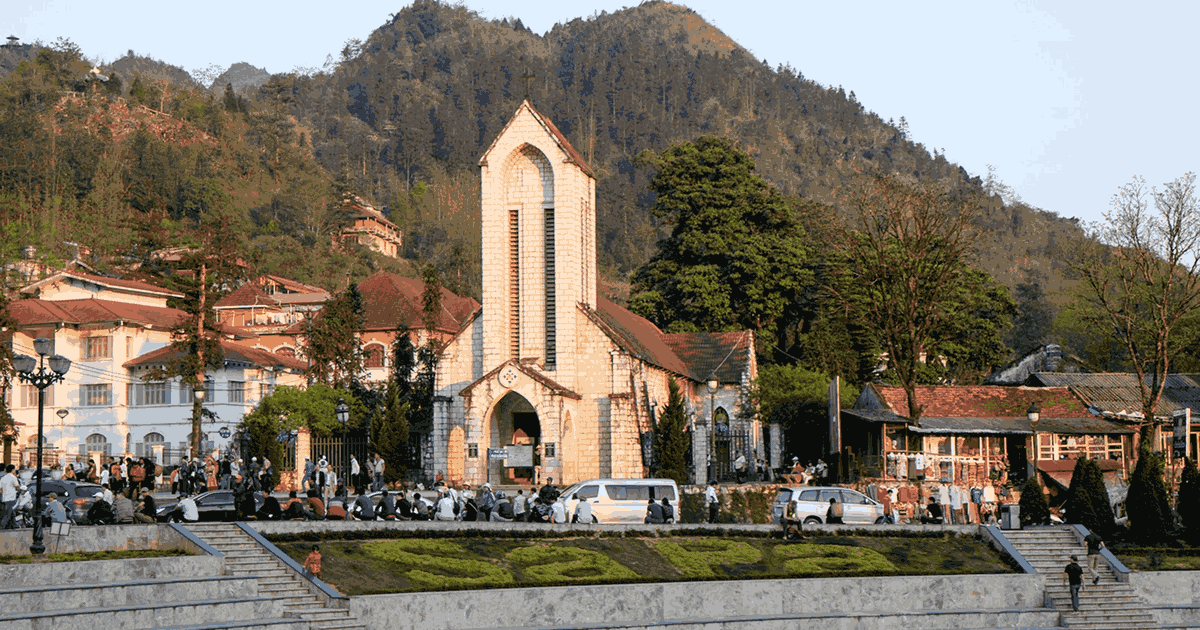
- Sapa and the Northwest: Cycling around Sapa allows you to visit ethnic minority villages like Lao Chai and Ta Van. The highlight for many is the O Quy Ho Pass, one of the “Four Great Passes” of Vietnam, offering a 50km descent that will test your brakes and your nerves.
- Mai Chau & Pu Luong: For those who want the mountains without the extreme verticality of Ha Giang, Mai Chau offers valley floor riding surrounded by Thai ethnic stilt houses and lush nature reserves.
2. The Central Heritage Trail: Coastlines and Ancient Cities
This is the most popular region for cycling and bike tours in Vietnam because it combines world-class scenery with UNESCO World Heritage sites.
- The Hai Van Pass: This 21km stretch between Hue and Da Nang is the “Holy Grail” for road cyclists. Rising 500 meters above the sea, the views of Lang Co Bay are breathtaking.
- Hoi An Countryside: For a more relaxed experience, cycling Vietnam in the rural outskirts of Hoi An is a dream. You can pedal through the Tra Que vegetable gardens, watch water buffaloes in the rice paddies, and take a local ferry across the Thu Bon River.
- Hue’s Imperial Tombs: The former capital is exceptionally bike-friendly. A day trip cycling along the Perfume River to visit the tombs of Tu Duc and Khai Dinh is a must-do for history buffs.
3. The Mekong Delta: The “Water World” on Two Wheels
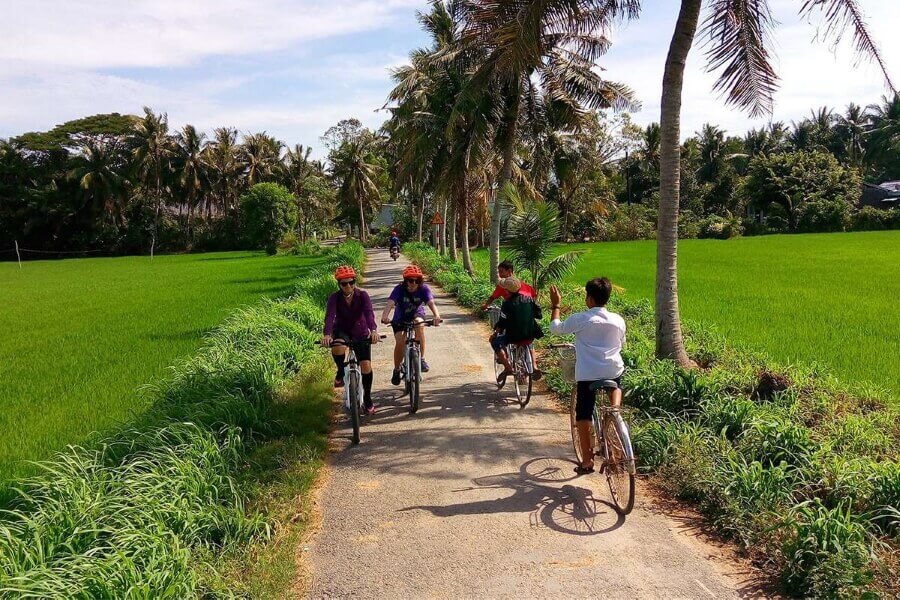
For those who prefer flat terrain and tropical landscapes, the South offers the quintessential cycling Vietnam experience.
- Ben Tre to Can Tho: Navigate the “Coconut Kingdom” via narrow paths that follow the canal networks. You’ll cross hundreds of small bridges and pass through fruit orchards heavy with durian, rambutan, and mango.
- Logistics: The riding here is 90% flat, making it the best region for families or those looking for a leisurely Vietnam cycling tour.
- The Floating Markets: Wake up early and cycle to the piers to witness the Cai Rang floating market, where commerce happens entirely on the water.
Top 5 Cycling Vietnam Routes For You
Vietnam offers some of the most diverse cycling terrain in Asia. From the high-altitude challenges of the North to the serene, flat waterways of the South, here are the top 5 cycling Vietnam routes for your next adventure.
1. The Ha Giang Loop: Northern Mountain Majesty
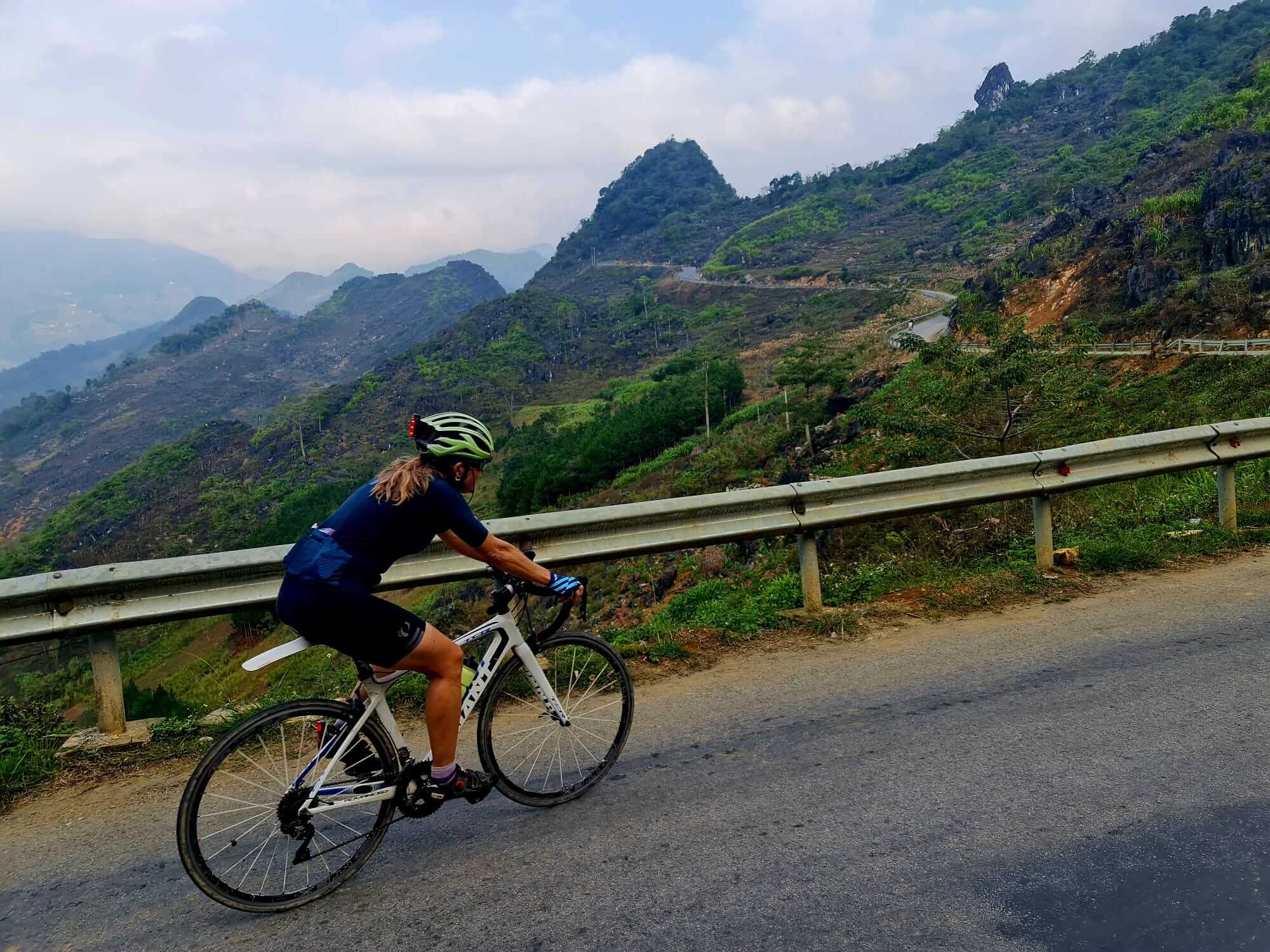
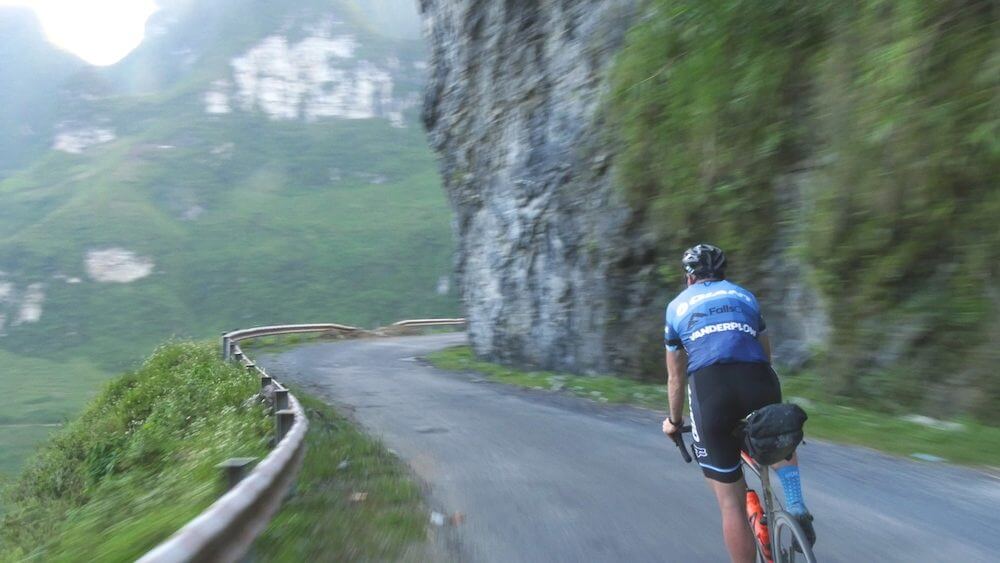
For experienced riders, this is the ultimate Vietnam cycling tour. This ~350km loop takes you through the Dong Van Karst Plateau, a UNESCO Global Geopark.
-
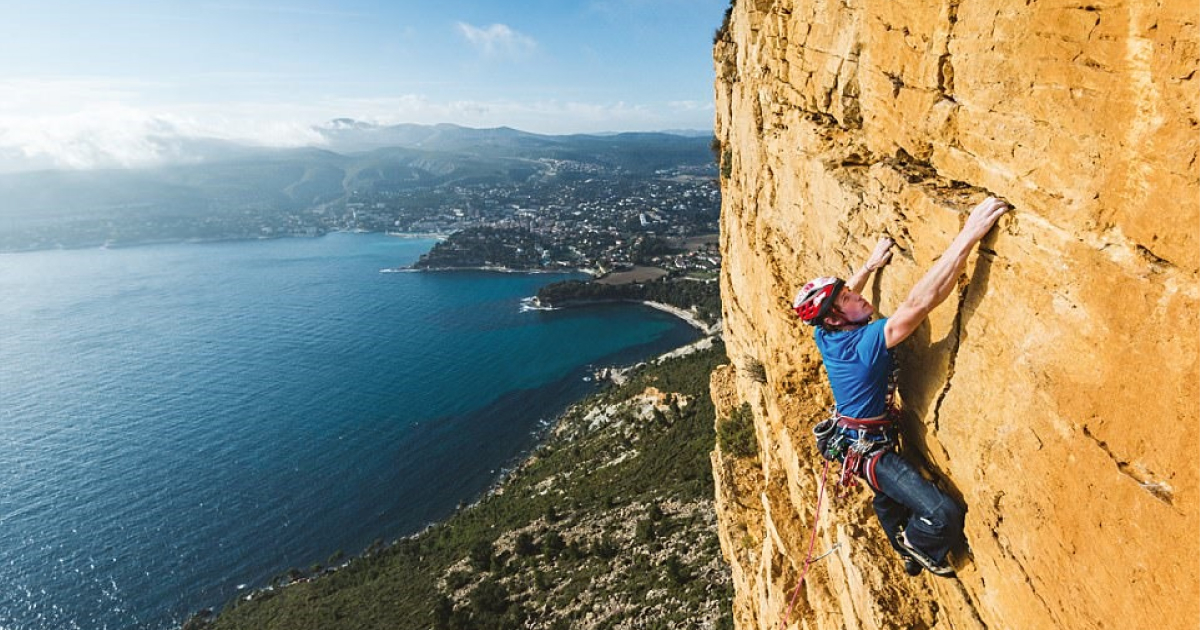
The Highlight: Conquering the Ma Pi Leng Pass, where you’ll pedal along a cliffside road overlooking the Nho Que River.
-
Terrain: Steep, sustained climbs and exhilarating technical descents.
-
Best Time: October to April.
2. The Hai Van Pass: The “Ocean Cloud” Coast
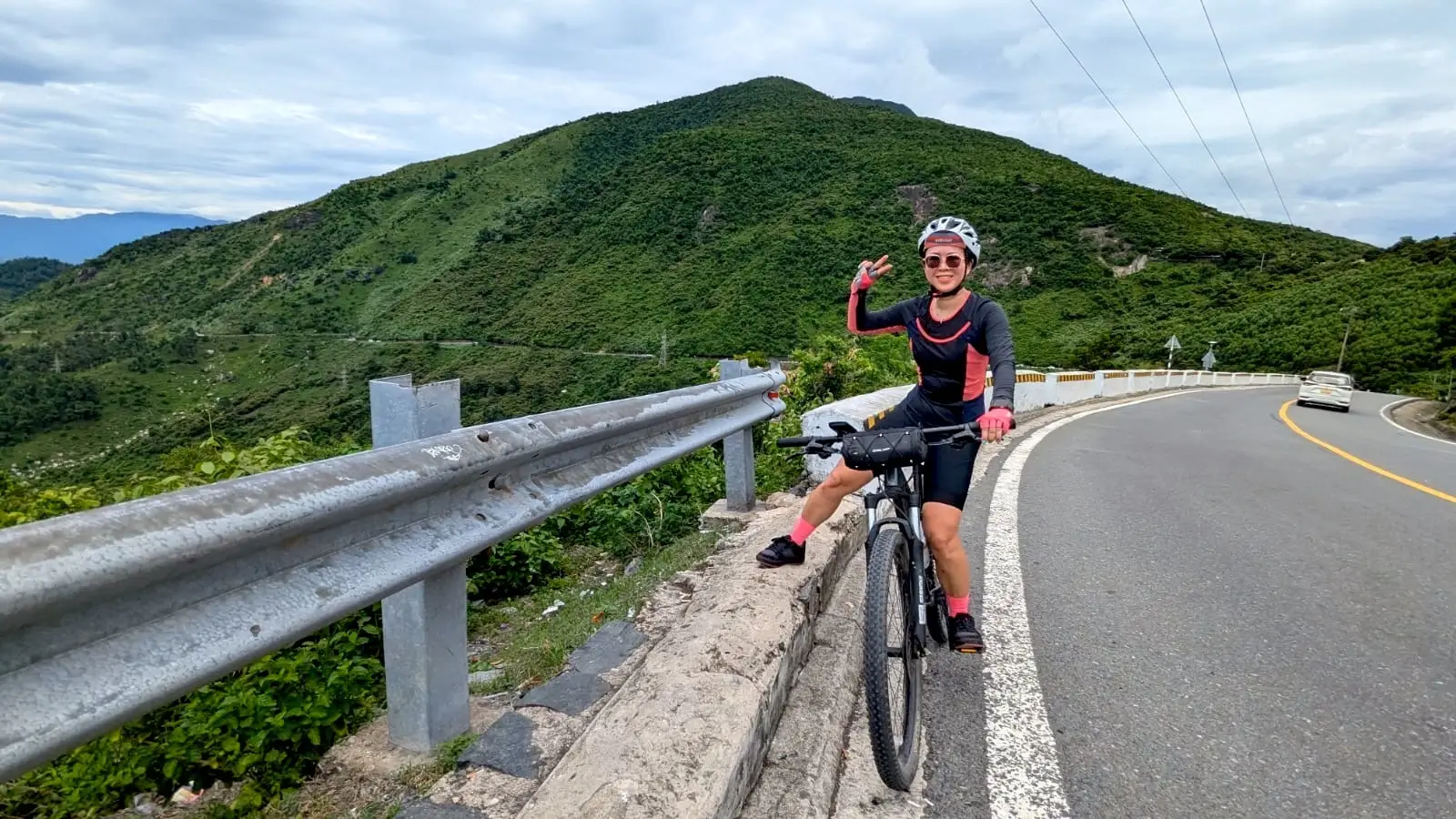
This iconic 21km stretch between Hue and Da Nang is a rite of passage for road cyclists.
-
The Highlight: Reaching the 500m summit for panoramic views of Lang Co Bay to the north and Da Nang city to the south.
-
Terrain: Perfectly paved switchbacks with a steady 7-10% grade. It is a challenging but manageable “bucket list” climb.
-
Best Time: February to June.
3. Ninh Binh: “Ha Long Bay on Land”
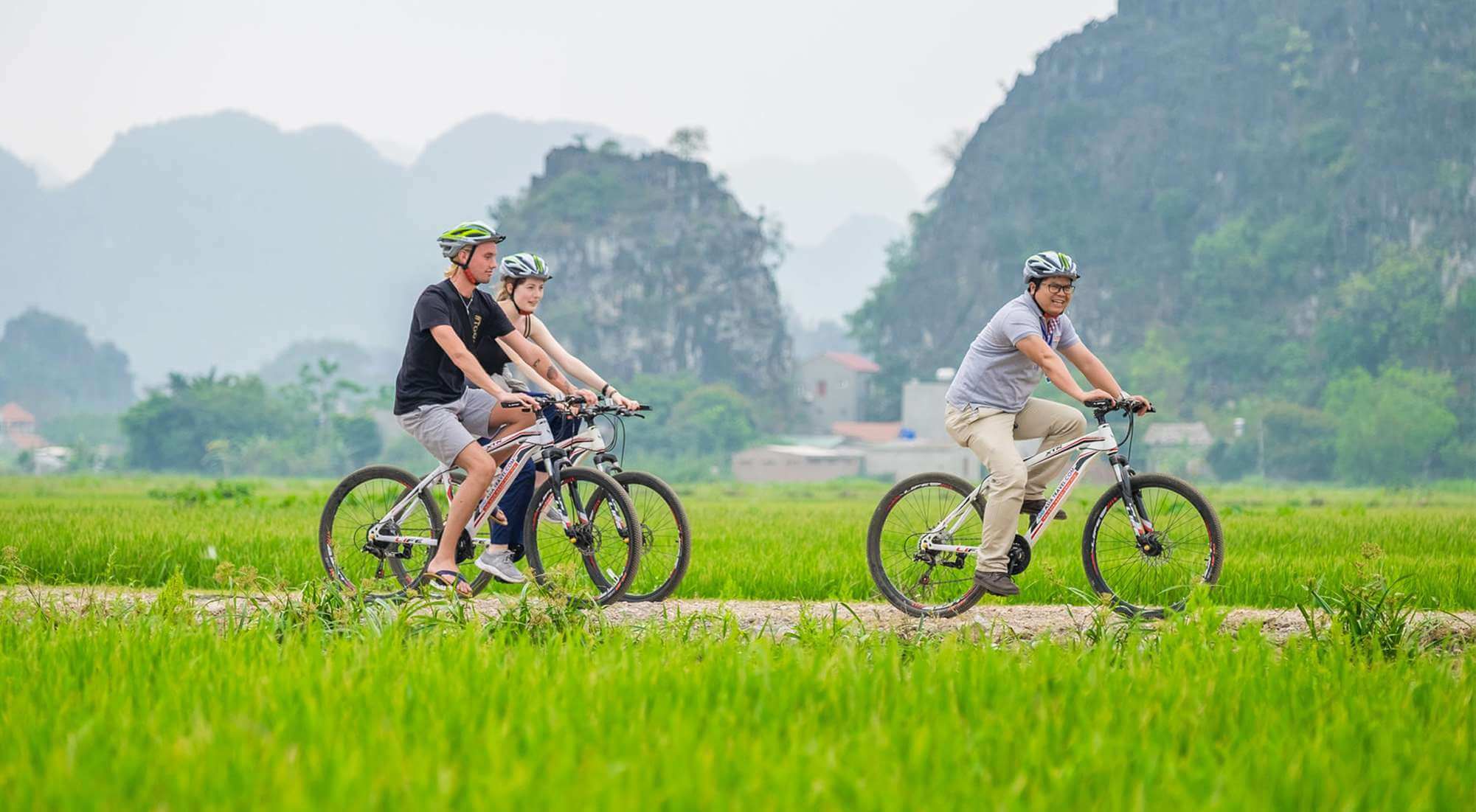
If you prefer a leisurely pace with high visual reward, cycling Vietnam’s Ninh Binh province is unbeatable.
-
The Highlight: The route from Tam Coc to Bich Dong Pagoda, winding through limestone karsts and emerald rice paddies. For more distance, head to Cuc Phuong National Park for a 40km forest ride.
-
Terrain: Mostly flat, rural roads—ideal for beginners and families.
-
Best Time: March to May and September to October.
4. Dalat to Mui Ne: Highlands to the Coast

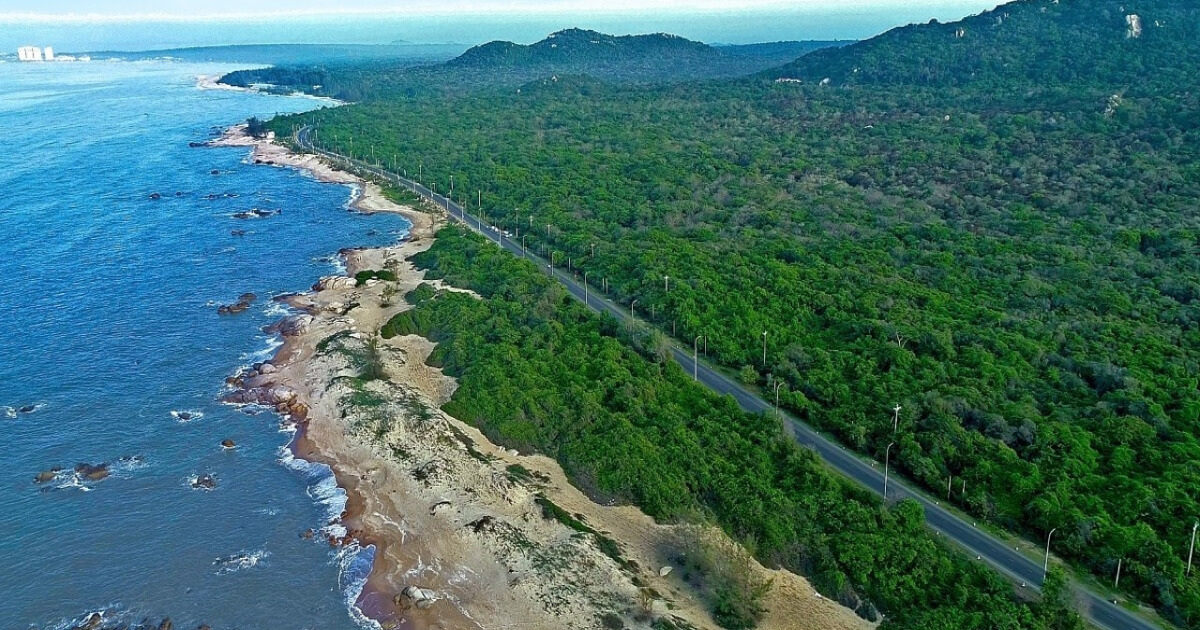
This route offers a dramatic transition from the misty pine forests of the Central Highlands to the white sand dunes of the coast.
-
The Highlight: A massive 25km descent from the Omega (Lo Xo) Pass, where the temperature rises as you drop toward the sea.
-
Terrain: A mix of highland plateaus followed by one of the longest downhills in the country.
-
Best Time: December to March.
5. The Mekong Delta: The Coconut & Canal Trails
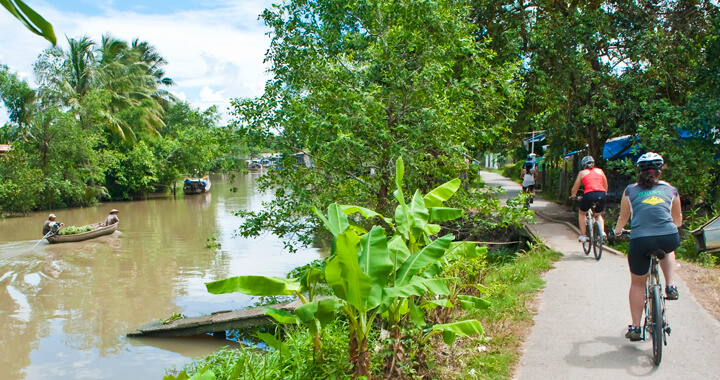
For an immersive cultural experience, nothing beats cycling and bike tours in Vietnam‘s “rice bowl.”
-
The Highlight: Exploring the Ben Tre loop, where you cycle on narrow paths shaded by coconut palms and cross small bridges over narrow canals.
-
Terrain: Very flat. The challenge here is navigating the maze-like paths and small local ferries.
-
Best Time: December to March.
Planning Your Vietnam Cycling Tour
Choosing Your Bike
When booking cycling and bike tours in Vietnam, the quality of the bicycle is the most important factor.
- Road Bikes: Best for the smooth tarmac of the Central Coast and the Hai Van Pass.
- Mountain Bikes (MTB): Essential for the North or the rugged trails of the Central Highlands (Dalat). Look for reputable brands like Giant, Trek, or Specialized.
- E-Bikes: A rising trend in cycling tours in Vietnam. E-bikes are perfect for leveling the playing field on hilly terrain, allowing riders of different fitness levels to stay together.
Best Time to Go
Timing is everything for a Vietnam cycling tour is Spring (February to May). This is the best overall window for the entire country. The North is warming up, and the South isn’t yet in the peak of monsoon season. Another option is Autumn (September to November), the ideal for the North (harvest season) but be wary of the Central region, which can experience flooding and typhoons.
What you should bring for cycling trip?
Packing for a Vietnam cycling tour requires a balance between technical performance and tropical practicality. The heat, humidity, and sudden downpours mean your gear needs to work overtime to keep you comfortable.
1. Technical Cycling Gear
-
Padded Shorts (Bibs): These are non-negotiable for long days in the saddle to prevent saddle sores and chafing.
-
Moisture-Wicking Jerseys: Opt for lightweight, breathable fabrics. Long-sleeve jerseys or UV arm sleeves are highly recommended to protect against the intense Vietnamese sun.
-
Padded Gloves: Essential for absorbing road vibration and protecting your nerves (preventing “biker’s palsy”).
-
Helmet: Always bring your own for a guaranteed fit, as local rental helmets may not meet safety standards.
2. Weather & Sun Protection
-
High-SPF Sunscreen & Lip Balm: Reapply frequently; the sun is brutal even on overcast days.
-
Lightweight Rain Jacket/Poncho: A packable, breathable waterproof layer for sudden monsoon bursts.
-
Polarized Sunglasses: To shield your eyes from glare, dust, and insects.
3. Health & Hygiene
-
Chamois Cream: A lifesaver for long-distance multi-day trips.
-
Hydration Salts/Electrolytes: To replenish minerals lost through heavy sweating.
-
Personal First-Aid Kit: Include antiseptic wipes, bandages, and DEET-based insect repellent.
4. Essential Electronics
-
Power Bank: To keep your GPS or phone charged for navigation.
-
Phone Mount: A sturdy mount is vital for following digital maps.
-
Local SIM Card: Viettel offers the best coverage in rural areas.
In Conclusion
A Vietnam cycling tour is more than just a physical challenge; it is a profound way to connect with one of the most vibrant cultures on earth. From the adrenaline of descending a mountain pass to the serenity of pedaling through a sun-drenched rice field, cycling and bike tours in Vietnam offer a perspective that remains hidden from those on the four-wheeled path.
As the country continues to develop, these quiet backroads and traditional ways of life are precious. There is no better time than now to grab a helmet, hop on a saddle, and discover why cycling Vietnam is considered one of the greatest travel experiences in the world.
FAQs
1. How many kilometers do people usually ride per day on a Vietnam cycling tour?
Most cycling tours in Vietnam average between 40km to 80km per day. Guided tours usually offer a support van, so if you get tired or the weather turns, you can simply hop in the van for a rest.
2. Is it safe to cycle in big cities like Hanoi or Ho Chi Minh City?
For beginners, it can be overwhelming. We recommend starting your Vietnam cycling tour on the outskirts of the cities or in more rural provinces like Ninh Binh or Ben Tre. If you do ride in the city, follow the flow of the motorbikes and stay to the right.
3. Can I rent a high-quality road bike in Vietnam?
Yes! Major hubs like Hanoi, Da Nang, and Ho Chi Minh City have specialized shops offering high-end carbon and aluminum bikes. Many cycling and bike tours in Vietnam include the bike rental in their package price.
4. Do I need to be a professional athlete to go cycling in Vietnam?
Not at all. While the North requires a good fitness level, the Mekong Delta and many coastal routes are very accessible for casual riders. E-bikes are also widely available now for those who want a bit of help on the hills.
5. Is it easy to find water and snacks along the routes?
Vietnam is a cyclist’s paradise for snacks. Every few kilometers, you will find a “Quán” (small shop) selling cold water, Pocari Sweat, bananas, and the famous Cà Phê Sữa Đá (iced coffee with condensed milk), which is the ultimate cyclist’s fuel.
Read more:
Unforgettable Hue Vietnam Itinerary: 5 Days of Discovery
Top 13 Delicious Food In Hoi An And More To Try On Your Trip