
Discover Thung Lau Ninh Binh, a peaceful historical valley surrounded by majestic limestone mountains and untouched natural scenery in Ninh Binh. Closely associated with the legendary figure Dinh Bo Linh, Thung Lau is not only known for its cultural and historical significance but also for its tranquil landscapes that attract nature lovers and travelers seeking authentic experiences. In this guide, Vietnamtour 247 invites you to explore the beauty, heritage, and fascinating stories hidden within Thung Lau Ninh Binh.
The Origin Of The Name Thung Lau Ninh Binh – The “Reed Flower Valley” Of The Ancient Capital
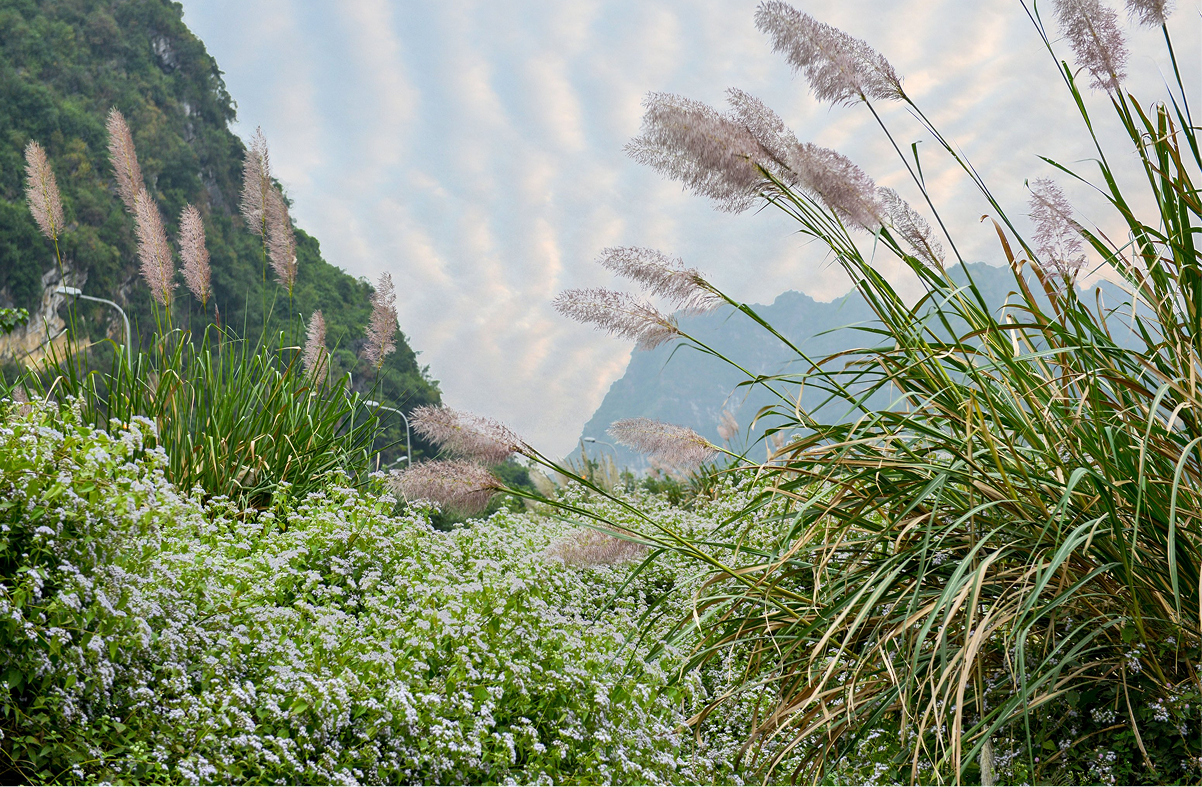
Thung Lau Ninh Binh is a place whose name reflects both local culture and ancient linguistic roots. Historically, the name Hoa Lu is believed to be the Sino-Vietnamese pronunciation of the phrase “hoa lau,” which refers to the wild reed flowers that once grew abundantly across this area. Because of this natural landscape, locals gradually began calling the valley Thung Lau, meaning “Reed Flower Valley,” where white reed blossoms cover the fields during the blooming season.
Today, Thung Lau is not only admired for its scenery but also for the cultural story behind its name. The valley has long been associated with the landscape and history of Hoa Lu Ward, a historically significant area of Ninh Binh Province that once served as the capital of ancient Vietnam.
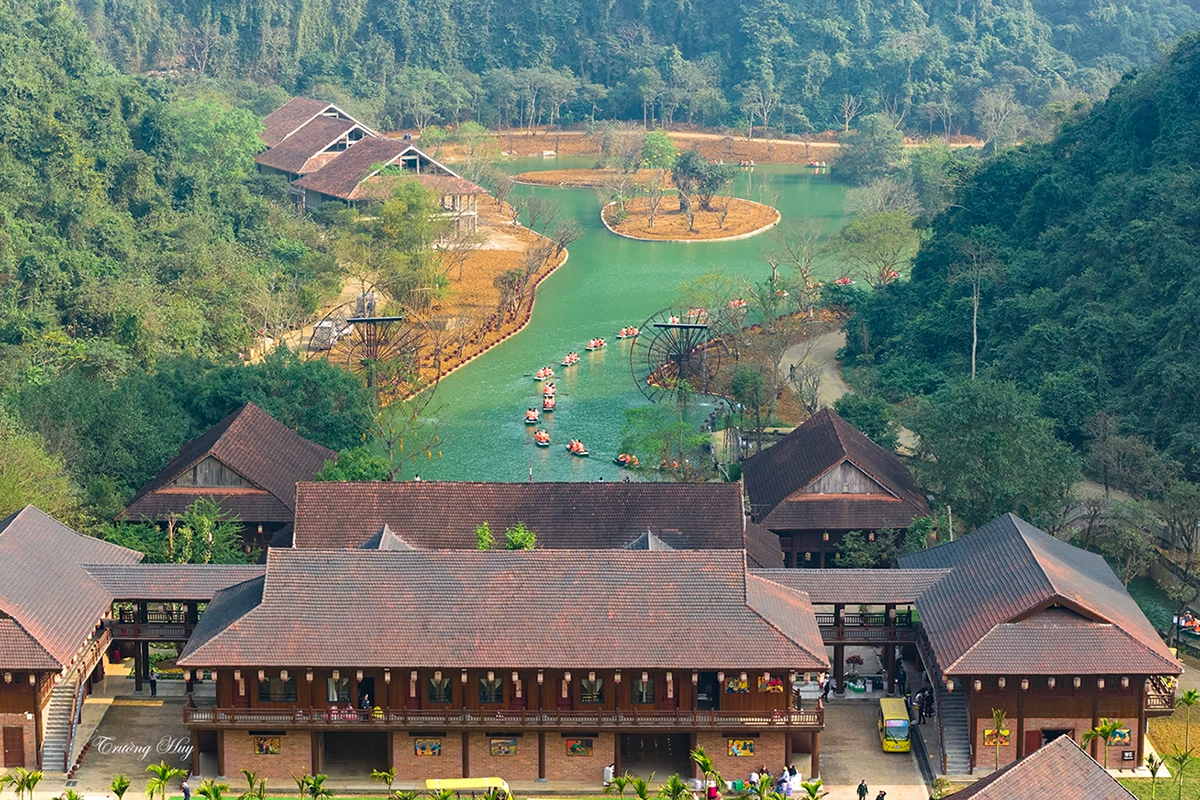
In addition to the commonly used name Thung Lau Ninh Binh, the destination is also known as Thung Ong. This name originates from a temple dedicated to Saint Ong – Nguyen Minh Khong, a revered monk and spiritual figure in Vietnamese history. The temple once stood within the valley and played an important role in the spiritual life of the local community, further enriching the cultural heritage of Ninh Binh.
Today, the combination of natural beauty, historical roots, and spiritual significance makes this place to a unique destination where visitors can experience both the peaceful countryside landscape and the cultural depth of the ancient capital region.
Historical Traces of Dong Hoa Lu and the Homeland of King Dinh Tien Hoang
Thung Lau Ninh Binh is not only a pristine natural landscape but also a place deeply connected to significant milestones in Vietnamese history. According to records in the Dai Viet Su Ky Toan Thu, Dong Hoa Lu is believed to be the birthplace of Dinh Tien Hoang, the emperor who founded the Dinh Dynasty and established the nation of Dai Co Viet.
Researchers indicate that Dong Hoa Lu once included the area of Dai Huu Village in Chau Dai Hoang, now located in Gia Vien Commune, Ninh Binh Province. Within this historic setting, Thung Lau (also known as Dong Thung Lau) is considered the earliest stronghold of Dinh Bo Linh during his campaign to suppress the Anarchy of the 12 Warlords and unify the country.
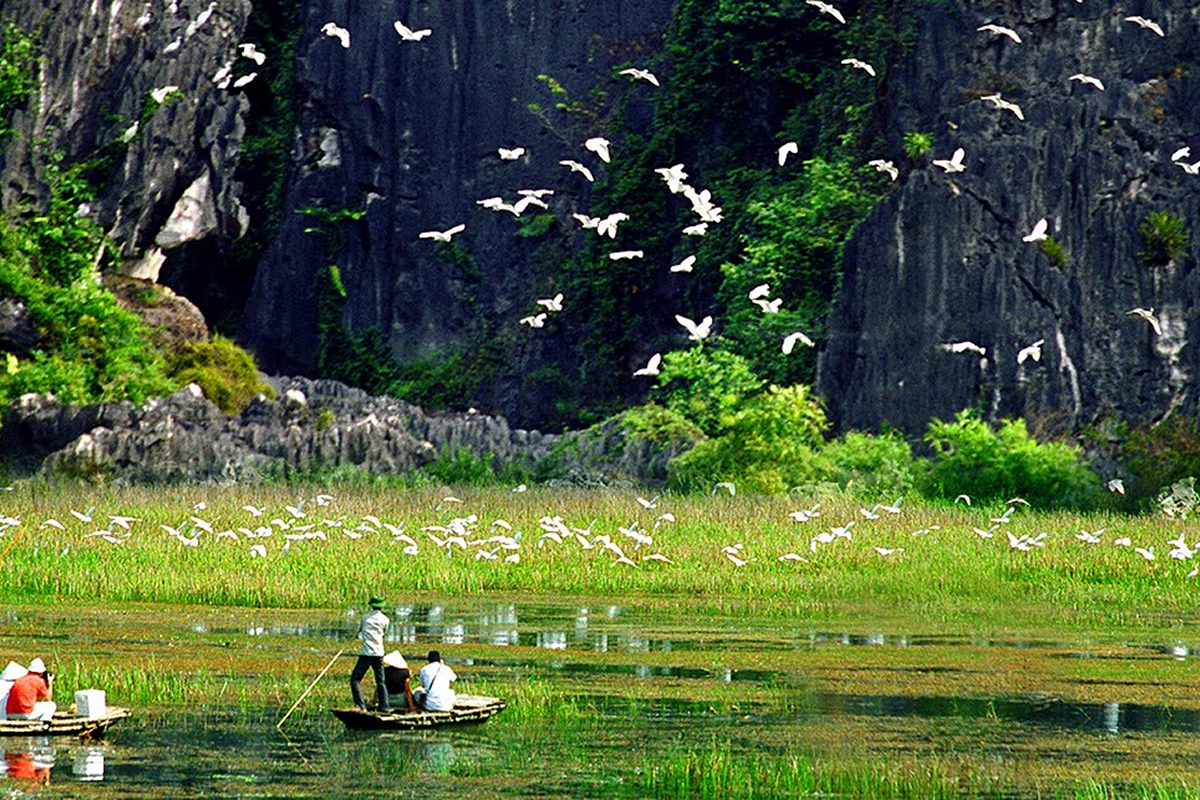
Legend says that during his childhood, Dinh Bo Linh herded buffalo, cut grass, and practiced the famous “flag-reed military games” in the valleys of Thung Lau, Thung La, and Thung Lui. These landscapes helped shape the determination and leadership of the future national hero. Located about 15 km north of Hoa Lu Ancient Capital, Thung Lau Ninh Binh served as an early strategic base during the formative period of his rise to power.
Born around 924 in Dong Hoa Lu, Chau Dai Hoang, Dinh Bo Linh gradually built his forces from the land of Ninh Binh, paving the way for a new era of independence and centralized rule after years of turmoil.
Today, Thung Lau is not only a destination admired for its untouched natural beauty but also an important historical site that enriches the cultural and historical depth of the Hoa Lu region.
Thung Lau Ninh Binh – “Dong Hoa Lu” in the Legendary White Reed Valley
Thung Lau Ninh Binh, also known as Dong Hoa Lu, is actually a natural valley covering around 16 mau (approximately 6.5 hectares). The valley is surrounded by a semicircular limestone mountain range rising about 200 meters high. These towering cliffs form a natural wall that almost completely isolates Thung Lau from the outside world, creating a landscape that feels both untouched and mysteriously beautiful.
The valley has an almost circular shape with a diameter of about 200 meters, nestled quietly in the heart of the mountains. Encircling this area is Dam Cut, a wetland stretching roughly 3 kilometers long and 500 meters wide, functioning like a natural moat that once protected Dong Hoa Lu in ancient times. This unique topography contributes greatly to the scenic value and historical significance of Thung Lau Ninh Binh.
In the past, the entrance to Thung Lau Ninh Binh was only a narrow path about 30 meters high, filled with steep and rugged rocks that made access difficult. Today, the local government has built a new stone stairway consisting of approximately 240 steps winding through nine gentle curves, symbolizing the image of a sacred dragon. This pathway not only improves accessibility but also adds a sense of majesty and legend to the journey into Thung Lau.
One of the most distinctive features of Thung Lau Ninh Binh is the vast reed fields growing across the mountainsides and valley floor. Around October each year, the reeds bloom into brilliant white flowers that blanket the entire valley, creating a poetic and epic landscape. This scenery also evokes the legendary childhood story of Dinh Bo Linh and his famous “reed flag military games,” a symbolic tale deeply connected to the historic land of Hoa Lu.
Dinh Tien Hoang Temple Inside Hoa Lu Cave – A Sacred Landmark of Thung Lau Ninh Binh
Located deep inside Hoa Lu Cave, Dinh Tien Hoang Temple is one of the most important spiritual landmarks of Ninh Binh. The temple was built on the ancient foundation of the former royal fortress of King Dinh Tien Hoang, closely connected with the historical period when the king unified the country and established the Dinh Dynasty. Through several restoration periods, the temple has expanded in scale while still preserving its ancient and solemn architectural character.
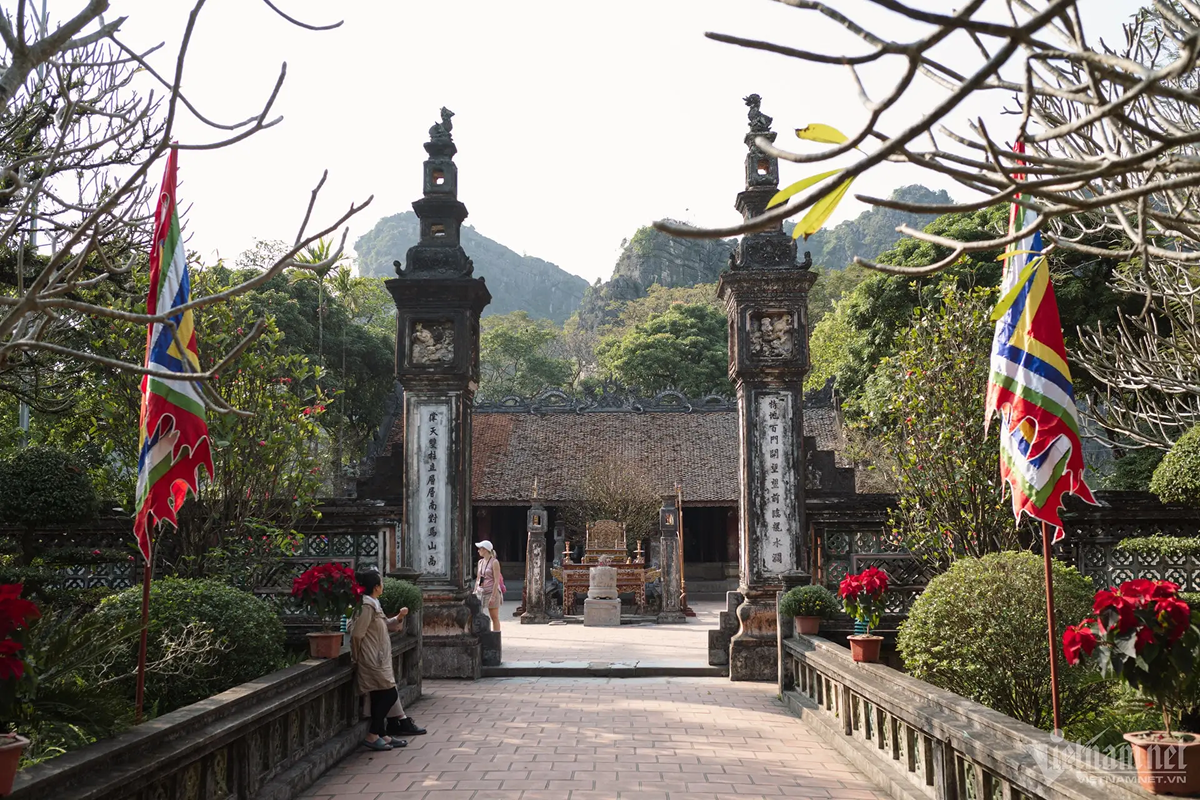
Inside the temple, visitors can still see a wooden plaque engraved with a classical Chinese poem composed by Thuc Bao La Xuan Oai in the year Tan Mui during the Tu Duc reign (1871). The poem vividly describes the natural beauty of Hoa Lu Cave, highlighting the cultural and historical significance of Thung Lau Ninh Binh.
Behind Dinh Tien Hoang Temple stands another sacred site dedicated to Saint Nguyen Minh Khong, a famous Zen monk of the Ly Dynasty who is highly respected by local people. The harmonious combination of historical heritage and spiritual belief creates a unique sacred atmosphere, making Thung Lau Ninh Binh not only a scenic destination but also a meaningful cultural and spiritual space for visitors exploring Ninh Binh Province.
Thung Lau Ninh Binh Temple Festival – Hoa
Every year on the 8th day of the 10th lunar month, the Thung Lau Ninh Binh Temple Festival, also known as the Hoa Lu Temple Ceremony, takes place at Thung Lau. Although smaller in scale than the famous festival at the Ancient Capital of Hoa Lu, this traditional event still preserves its solemn rituals and profound spiritual significance.
Rooted in the Vietnamese tradition of “gratitude to ancestors,” the festival at Thung Lau Ninh Binh is organized by the local community with respectful ceremonial offerings and traditional processions to honor the contributions of King Dinh Tien Hoang and other historical figures.
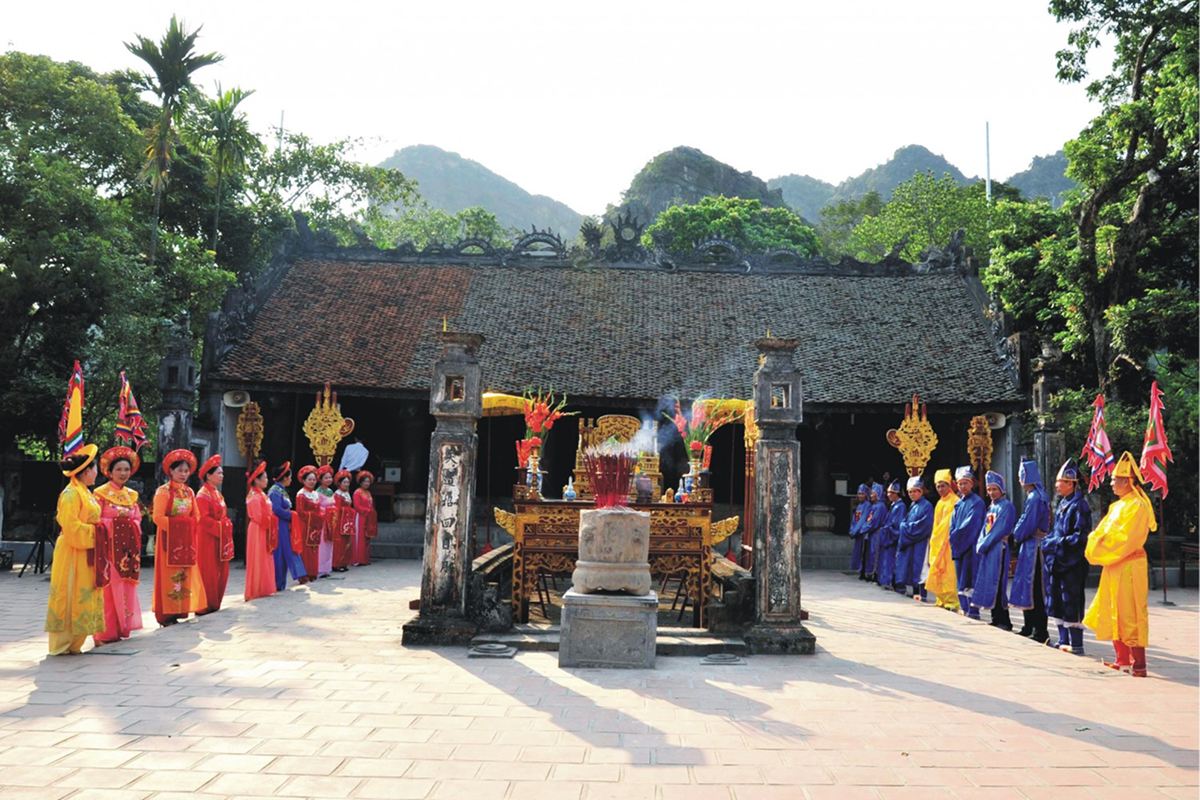
In addition to the solemn ceremonial rituals, the festival also features a lively festive atmosphere with many traditional folk activities such as wrestling competitions, the reenactment of the Co Lau military training, lion dances, Cheo folk performances, and traditional folk singing. These vibrant cultural activities create an exciting atmosphere that attracts both local residents and visitors to experience the heritage of the region. The festival atmosphere also shares many cultural similarities with the famous Hoa Lu Ancient Capital Festival, one of the most important traditional celebrations in Ninh Binh.
With its deep historical, cultural, and spiritual value, Thung Lau Ninh Binh is not only a scenic destination but also a place that preserves the enduring spirit of gratitude and cultural identity of the ancient capital region.
Tips for Visiting Thung Lau Ninh Binh
To fully enjoy your trip to Thung Lau, visitors should prepare carefully to make the journey more comfortable and memorable.
- Visit during the dry season
The best time to explore Thung Lau is from October to April, when the weather is cooler and the natural scenery is at its most beautiful. Sunny days also make sightseeing and photography much easier. - Wear comfortable clothing and shoes
Since the area includes natural trails, limestone landscapes, and countryside paths, lightweight clothing and comfortable sneakers are recommended for easier movement. - Bring water and sun protection
Some areas around Thung Lau have limited shade, especially during midday. Travelers should prepare drinking water, sunscreen, hats, and sunglasses for a more pleasant experience. - Respect the historical and natural environment
As Thung Lau is associated with important historical stories linked to Dinh Bo Linh, visitors should help preserve the site by avoiding littering or damaging the surrounding landscape. - Combine nearby attractions
Travelers can combine their visit to Thung Lau with famous destinations in Ninh Binh such as Trang An Scenic Landscape Complex, Hoa Lu Ancient Capital, or Tam Coc for a more complete Ninh Binh itinerary.
FAQ about Thung Lau Ninh Binh
Where is Thung Lau located?
Thung Lau Ninh Binh is located in Hoa Lu Ward, Ninh Binh Province, about 15 km north of the ancient capital area. The valley is surrounded by limestone mountains and wetlands, creating a peaceful and secluded natural landscape.
Why is it called Thung Lau Ninh Binh?
The name “Thung Lau” means “Reed Flower Valley.” It comes from the wild reed flowers that once grew abundantly across the valley. During the blooming season, white reed blossoms cover the landscape, giving the area its poetic name.
Is Thung Lau connected to Vietnamese history?
Yes. Historical records associate the area with the childhood and early activities of Dinh Tien Hoang. It is believed that he practiced the famous “reed flag military games” here before later unifying the country and founding the Dinh Dynasty.
What makes Thung Lau unique compared to other places in Ninh Binh?
The valley is almost completely surrounded by limestone mountains forming a natural fortress. Combined with wetlands and vast reed fields, this creates a dramatic landscape that feels untouched and historically significant.
Conclusion
hung Lau Ninh Binh stands out as a remarkable spiritual and cultural destination where majestic natural scenery blends harmoniously with ancient architecture. Surrounded by the limestone landscapes typical of Ninh Binh, the site features intricately carved stone reliefs and delicate ornamental patterns that reflect the depth of traditional Vietnamese craftsmanship. Every architectural detail at Thung Lau is carefully designed, creating a serene and sacred atmosphere while preserving the cultural and spiritual identity of the former imperial land.
If you are looking to experience the peaceful beauty and cultural depth of Thung Lau Ninh Binh, let Vietnamtour 247 accompany you on a meaningful journey to discover one of the most fascinating spiritual destinations in Ninh Binh.
Explore exciting destinations with Vietnamtour247 now!
- Website: Vietnamtour247
- Fanpage: Vietnamtour247
- Hotline: (+84) 979133907
- WhatsApp: (+84) 916289247
- Email: sales@vietnamtour247.com
- Address: 128 Ngoc Tri St, Long Bien District, Hanoi