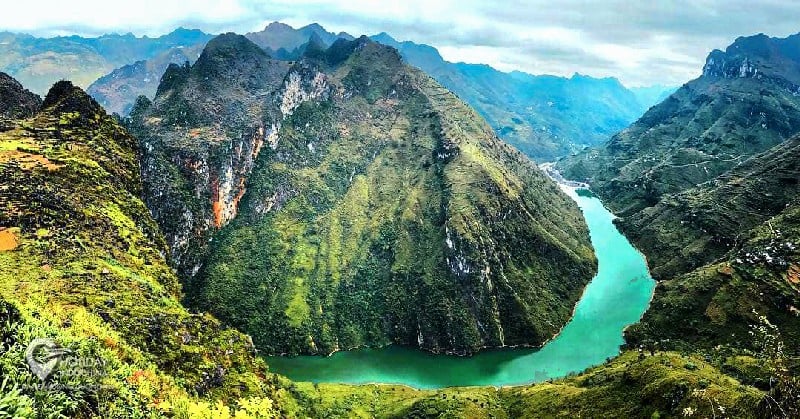
When planning a trip to the northernmost frontier of Vietnam, one factor stands above all others in determining your success: Ha Giang Vietnam weather. This isn’t just about whether you need an umbrella; in the high-altitude karst plateaus, the weather dictates road safety, visibility of the mountain passes, and the very color of the landscape—from emerald green rice paddies to golden harvests and purple buckwheat fields.
In this 2026 guide, we provide a deep dive into the Ha Giang weather forecast patterns, a month-by-month breakdown, and essential tips for tackling the Ha Giang loop weather challenges.
Overview of Ha Giang Vietnam Weather
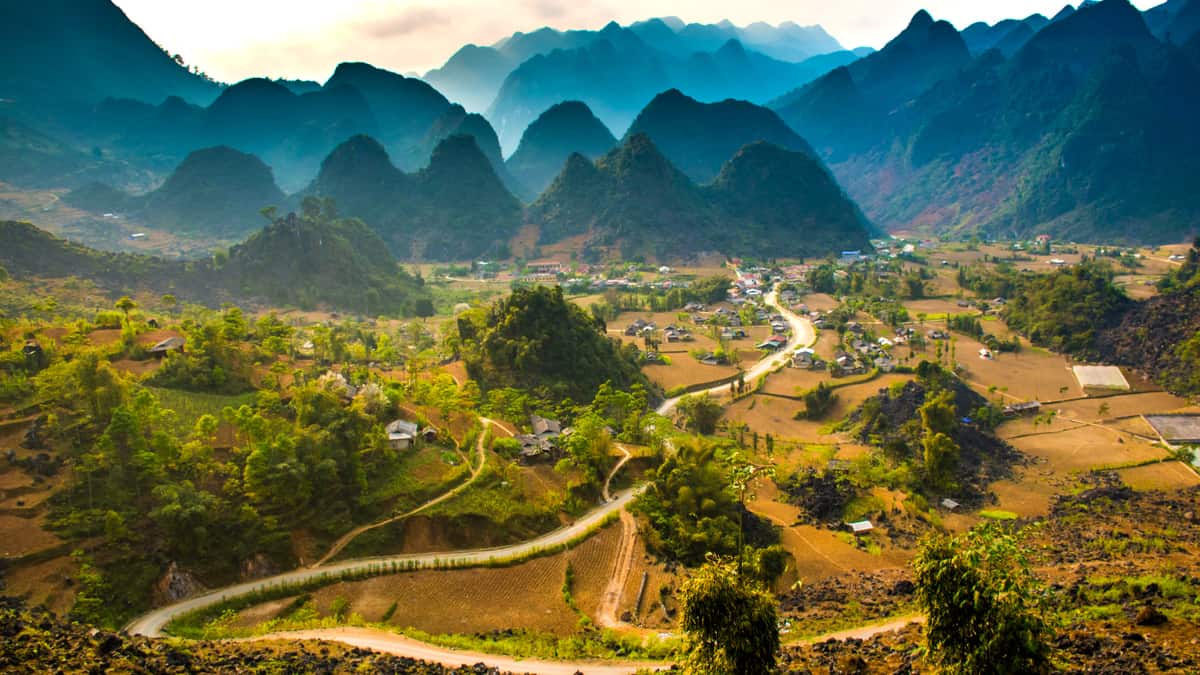
Ha Giang Vietnam weather is categorized as a humid subtropical climate, but its extreme topography creates several microclimates. While Ha Giang city weather (at a lower altitude) might feel warm and humid, the conditions in Dong Van or Meo Vac (at 1,500m+ elevation) can be 5–10°C cooler and significantly foggier.
The province generally experiences two main seasons:
- The Dry Season (October to April): Characterized by cool temperatures, clear blue skies, and low rainfall. This is the gold standard for travelers.
- The Rainy Season (May to September): Marked by higher temperatures, humidity, and the East Asian monsoon. While the landscape is at its greenest, the Ha Giang loop weather during this time can involve slippery roads and occasional landslides.
Read more: Vietnam Weather: Best Time to Visit Vietnam in the year 2026
Ha Giang Weather by Month: A Detailed Breakdown
Understanding the Ha Giang weather by month is essential for packing the right gear and setting realistic expectations for your photography and riding experience.
January: The Peak of Winter
- Temperature: 8°C – 15°C (46°F – 59°F).
- Conditions: Cold, dry, and often misty. Ha Giang city weather stays mild, but the mountain peaks can experience frost.
- Landscape: Misty mountains and early blossoms of cherry and plum trees.
February: The Season of Festivals
- Temperature: 10°C – 18°C (50°F – 64°F).
- Conditions: High humidity and “drizzle” (mưa phùn).
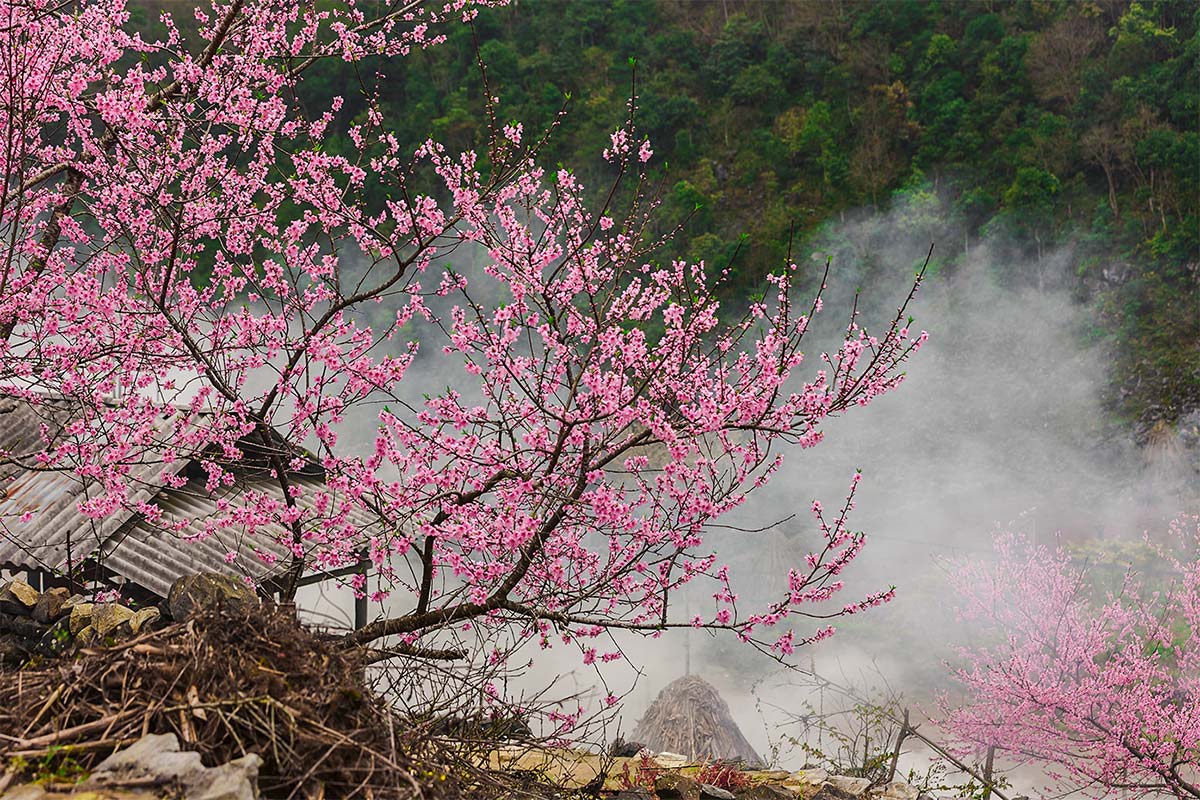
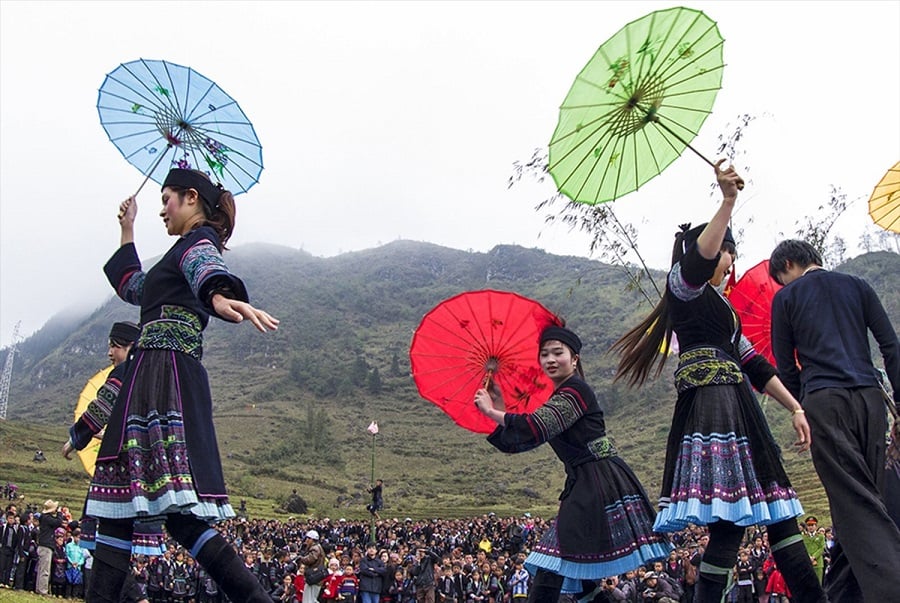
- Landscape: The hills turn pink and white with peach and plum blossoms. Lunar New Year (Tet) festivals bring a vibrant energy to the villages.
March: Spring Awakening
- Temperature: 15°C – 22°C (59°F – 72°F).
- Conditions: Clearer skies and very pleasant for riding. March is often cited in any Ha Giang travel guide as one of the best months for the loop.
April: The Mirror Season
- Temperature: 20°C – 28°C (68°F – 82°F).
- Conditions: Dry and warm.
- Landscape: Farmers begin the “pouring water” season, filling the rice terraces. Under the clear April sun, the hills look like thousands of shimmering mirrors.
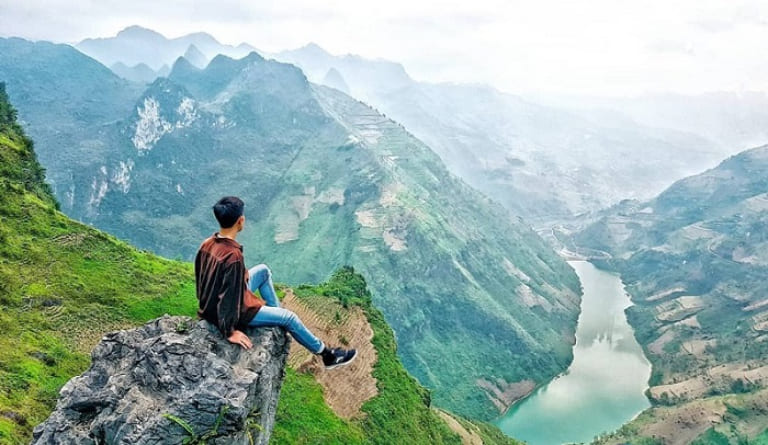
May: The Transition
- Temperature: 22°C – 30°C (72°F – 86°F).
- Conditions: The start of the rainy season. Ha Giang weather forecast will show afternoon thunderstorms.
- Landscape: Everything begins to turn a deep, vibrant green.
June & July: The Heat and the Rain
- Temperature: 25°C – 34°C (77°F – 93°F).
- Conditions: Hot, humid, and heavy rain. This is the most challenging Ha Giang loop weather. Flash floods and landslides are risks.
- Landscape: Waterfalls are at their most powerful, and the mountains are lush.
August: Monsoon Climax
- Temperature: 24°C – 32°C (75°F – 90°F).
- Conditions: Similar to July. Travelers must stay flexible with their itineraries as road closures can occur.
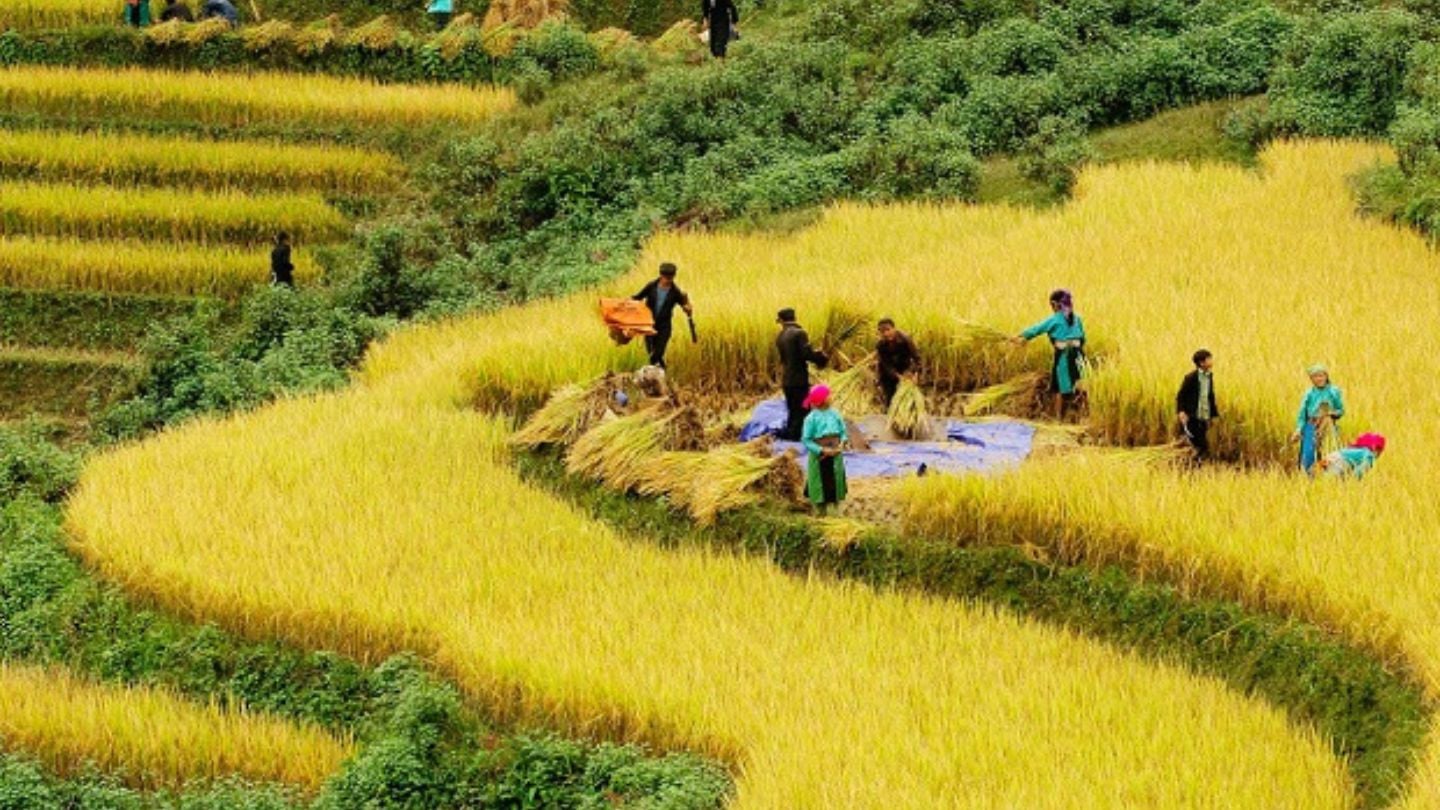
September: The Golden Harvest
- Temperature: 20°C – 28°C (68°F – 82°F).
- Conditions: Rains begin to taper off.
- Landscape: The famous rice terraces of Hoang Su Phi turn a stunning golden yellow. This is a peak month for photography.
October: The Best of Autumn
- Temperature: 18°C – 25°C (64°F – 77°F).
- Conditions: Crisp, dry air and crystal-clear visibility. The Ha Giang loop weather is perfect—neither too hot nor too cold.
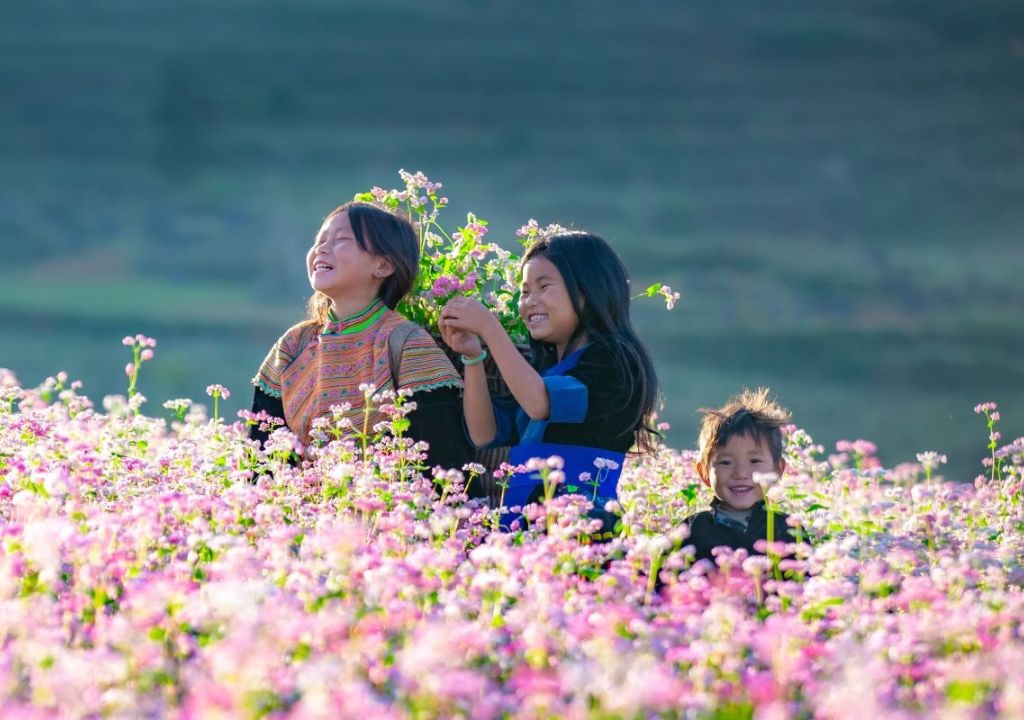
November: Buckwheat Bloom
- Temperature: 12°C – 20°C (54°F – 68°F).
- Conditions: Cool and dry.
- Landscape: The rocks are covered in the iconic pink and purple buckwheat flowers (Tam Giác Mạch).
December: Chilly and Atmospheric
- Temperature: 5°C – 15°C (41°F – 59°F).
- Conditions: Coldest month. Dense fog can settle in the canyons, creating an eerie, mystical atmosphere.
- Note: Pack heavy winter gear if you travel in late December.
Best Time to Visit Ha Giang Vietnam
While you can visit year-round, the best time to visit Ha Giang Vietnam depends on your priority:
- For Motorbike Riders: October and November or March and April. These months offer the driest roads and the best visibility, which is crucial for safety on the hair-pin turns of the Ma Pi Leng Pass.
- For Photographers: September (Golden Rice) or November (Buckwheat Flowers). The lighting during these months is soft and the landscapes are colorful.
- For Cultural Enthusiasts: February. This is when you can witness the traditional games and rituals of the ethnic minorities during the Lunar New Year.
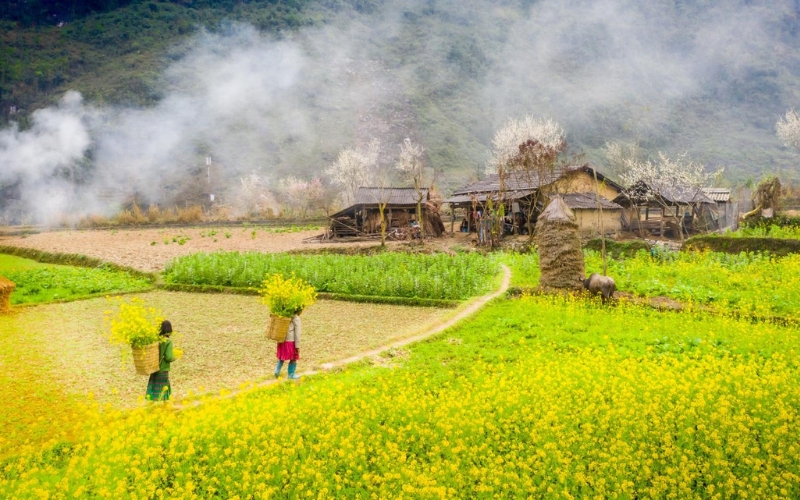
Amazing Activities Based on Ha Giang City Weather
Your daily itinerary should adapt to the Ha Giang city weather and the surrounding mountain conditions.
1. Sunny and Clear (Spring & Autumn)
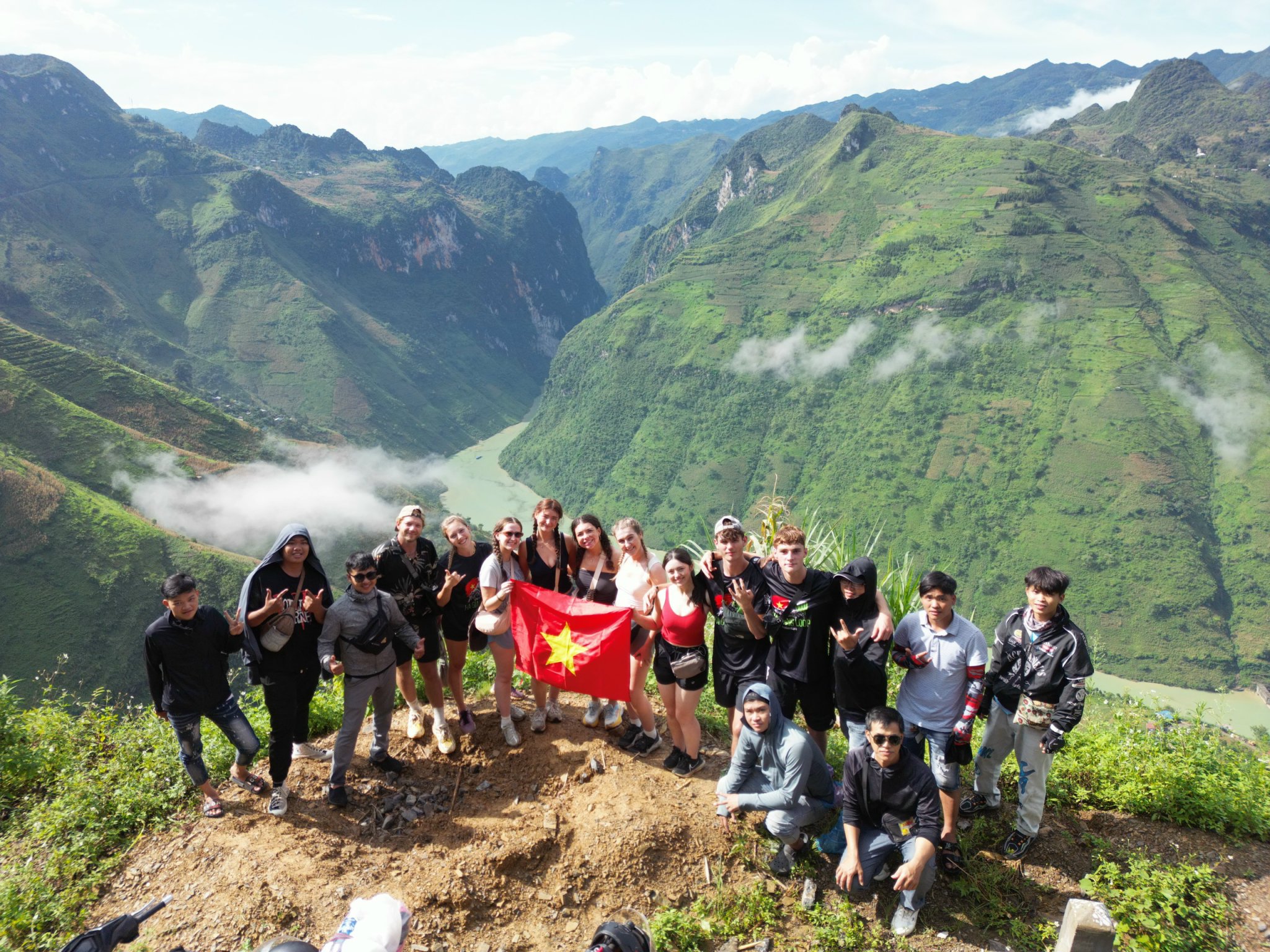
- The Ma Pi Leng Skywalk: Hike the “Sky Path” for panoramic views of the Nho Que River.
- Lung Cu Flag Tower: Climb the 389 steps to the top without worrying about slippery stone or fog obscuring the border view.
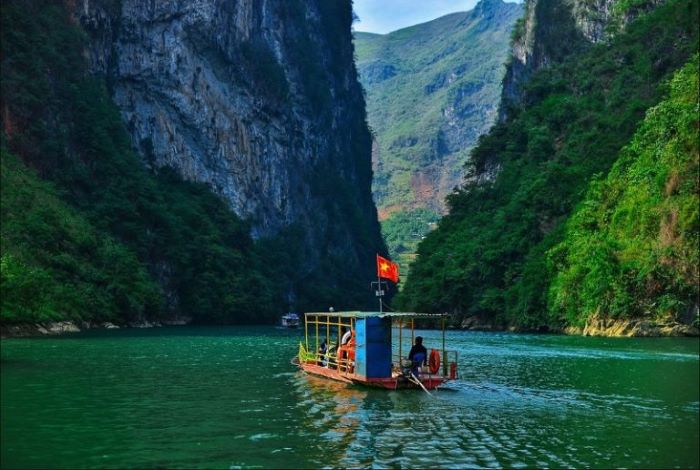
- Boat Trip on Nho Que River: The water is most emerald-green when the sun is shining directly into the canyon.

2. Rainy and Misty (Summer & Late Winter)
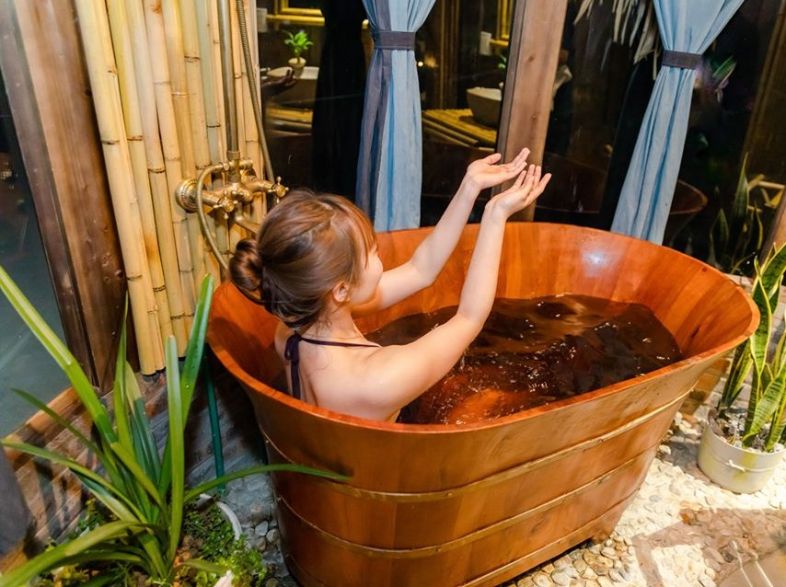
- Traditional Herbal Baths: If the Ha Giang weather forecast predicts a washout, head to a Dao ethnic village (like Nam Dam) for a medicinal herbal bath. It’s the perfect way to stay warm and dry.
- Market Hopping: Rain doesn’t stop the Sunday markets in Dong Van or Meo Vac. If anything, the mist adds a moody, authentic layer to the colorful ethnic costumes.
- Homestay Family Dinners: When the fog rolls in, there is nothing better than sitting around a fire with a local family, drinking “Happy Water” (corn wine) and eating hot pot.
In Conclusion
Navigating Ha Giang Vietnam weather is part of the adventure. The region is beautiful in every season, but it demands respect. Whether you are basking in the golden sun of October or navigating the mysterious fogs of January, being prepared with the right clothing and a flexible mindset is key. Always check a 3-day Ha Giang weather forecast before heading out on the loop, and remember: in the mountains, the weather can change in a heartbeat.
Otherwise, if you want to visit other beautiful places in Vietnam such as Ninh Binh, Hoi An or Halong Bay,… you should explore Ninh Binh weather, Hoi An weather and Halong weather.
FAQs
1. How cold does it get on the Ha Giang Loop?
In winter (Dec-Feb), temperatures can drop to 0°C – 5°C (32°F – 41°F) at night in high districts like Dong Van. Even in “warm” months, the wind chill on a motorbike can make it feel much colder.
2. Is the Ha Giang Loop safe during the rainy season?
It is “OK” for experienced riders, but beginners should be extremely cautious. Heavy rain causes mud on the roads and can lead to landslides. If you travel between June and August, hiring an “Easy Rider” (local driver) is highly recommended for safety.
3. Does it snow in Ha Giang?
Snow is rare but does happen on the highest peaks of the Dong Van Karst Plateau during extreme cold snaps in late December or January.
4. What should I pack for the “shoulder” seasons (September or May)?
Layers are your best friend. Bring light, breathable clothes for the humid afternoons and a windbreaker or light fleece for the chilly mountain mornings.
5. Why is the visibility so low in the mornings?
The high altitude leads to “cloud inversions,” where thick mist settles in the valleys and passes. Usually, the sun “burns off” this mist by 10:00 AM or 11:00 AM.